
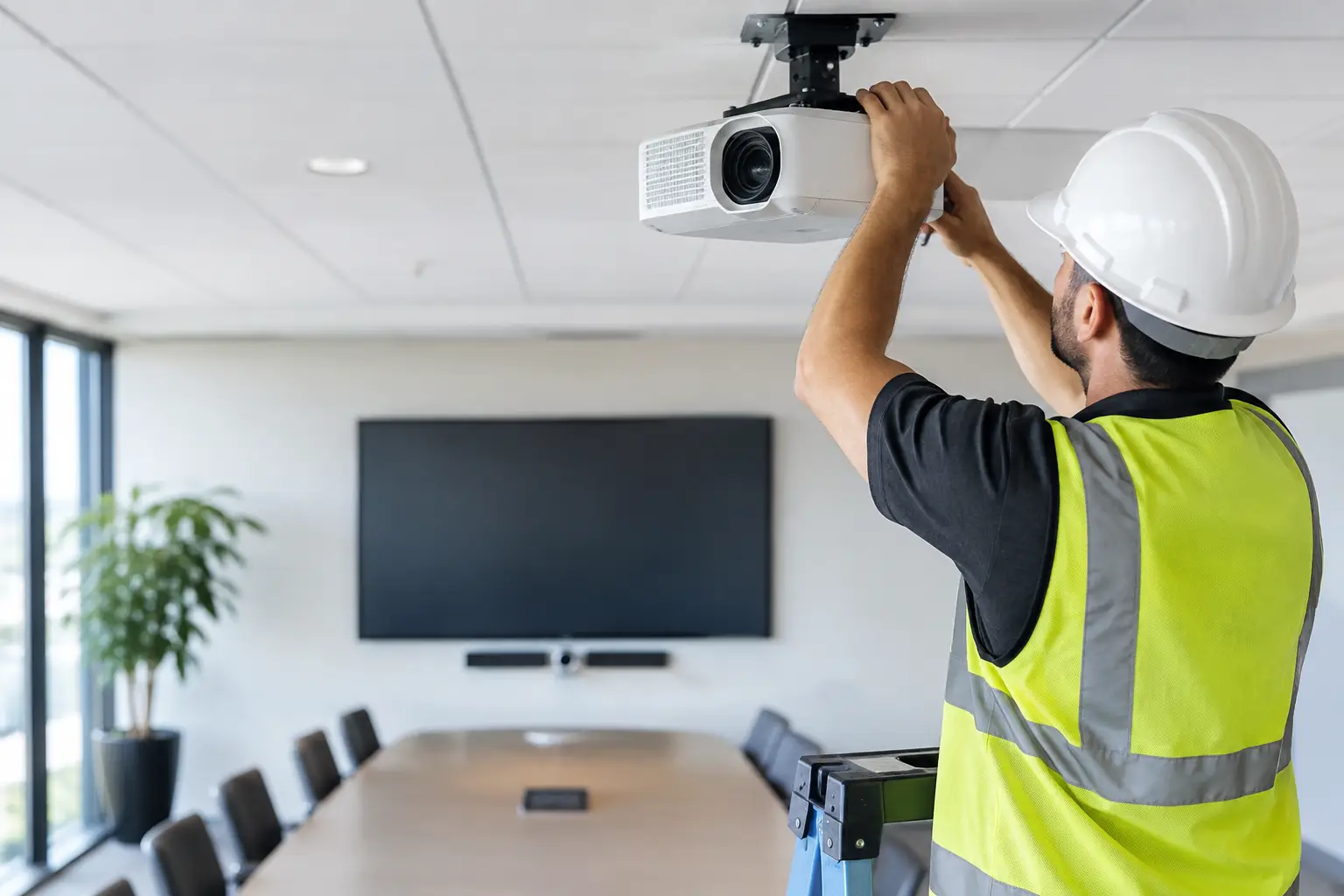
A premium property can have exceptional joinery, carefully considered lighting and beautifully resolved finishes, yet still feel frustrating if entertainment, climate, security and connectivity are treated as separate purchases. The right AV installer does more than mount a television or fit speakers. They plan the technology behind the walls, coordinate it with the wider build and make the finished environment straightforward for the people who use it.
That distinction matters most on projects where architecture, interiors and building systems must work together. Whether it is a family home, a penthouse, a boardroom suite or a multi-storey office, the best result is rarely created by adding technology late in the programme. It comes from careful design decisions made early enough to protect both performance and appearance.
What an AV installer is responsible for
An AV installation is often described in terms of screens, speakers and control systems. In practice, these are only the visible parts of a much wider technical brief. A considered installer looks at how a building will be occupied, entertained in, secured and serviced over time.
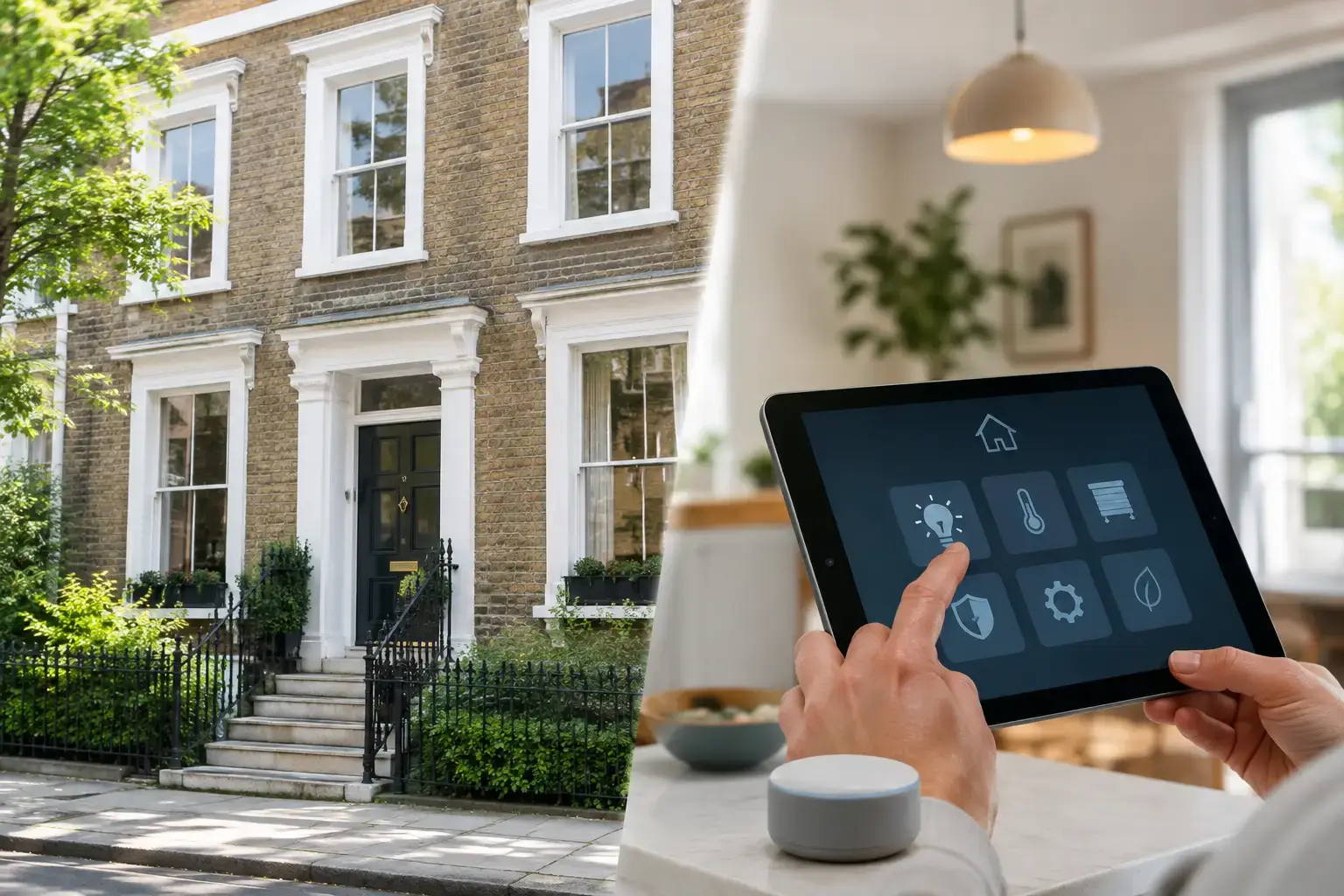
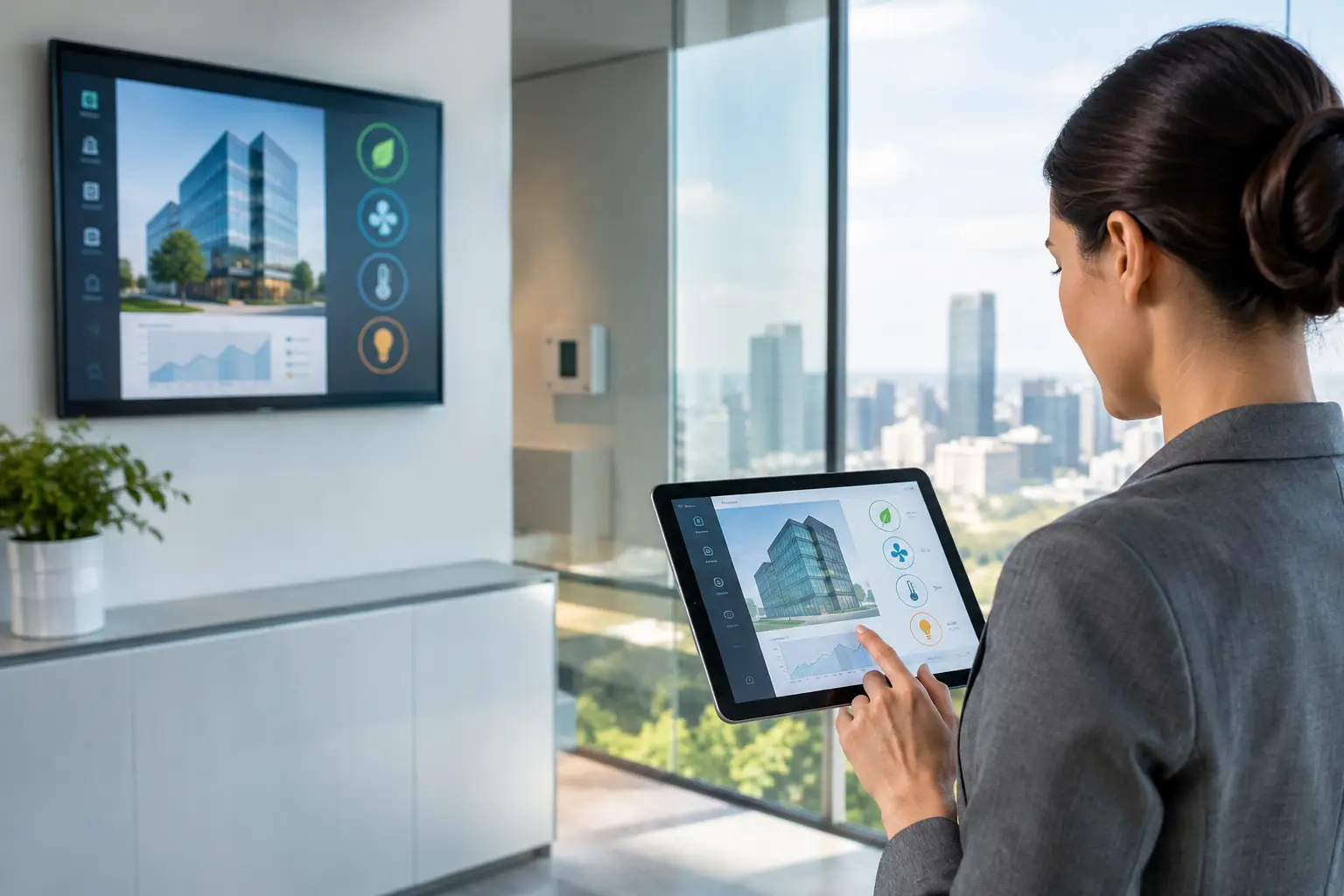
For a residence, this may include distributed music, cinema rooms, discreet television integration, automated lighting, heating and cooling control, CCTV, door entry and a reliable network system. In a commercial setting, it could encompass presentation spaces, meeting-room technology, digital signage, occupancy-led controls, access control and integrated BMS systems.
The essential task is coordination. Every system requires power, containment, data cabling, equipment space and a clear control strategy. If these requirements are considered individually, the result can be multiple apps, visible cables, poorly placed sensors and technology that is difficult to support. A specialist integrator brings the elements into one coherent design, while respecting the architectural and interior intent.
The value of planning before the walls close
The most expensive AV decisions are often the ones made too late. Once ceilings are complete, joinery is installed and decorations are underway, moving a speaker position, adding a network point or finding a route for control cabling can become disruptive and costly.
Early design allows an installer to produce coordinated drawings and specifications that work alongside the architect, interior designer, M&E consultant and contractor. Speaker positions can be aligned with ceiling details. Access panels can be located where maintenance is possible but visually discreet. Equipment can be housed in a properly ventilated rack rather than placed inside a cabinet never intended to manage heat.
This is also the point to decide what should be automated. A client may want lighting scenes at the touch of a button, shades that respond to daylight, or climate settings that suit different areas of the property. Not every function needs automation. The aim is to make recurring actions easier, not to make a simple task feel unnecessarily complicated.
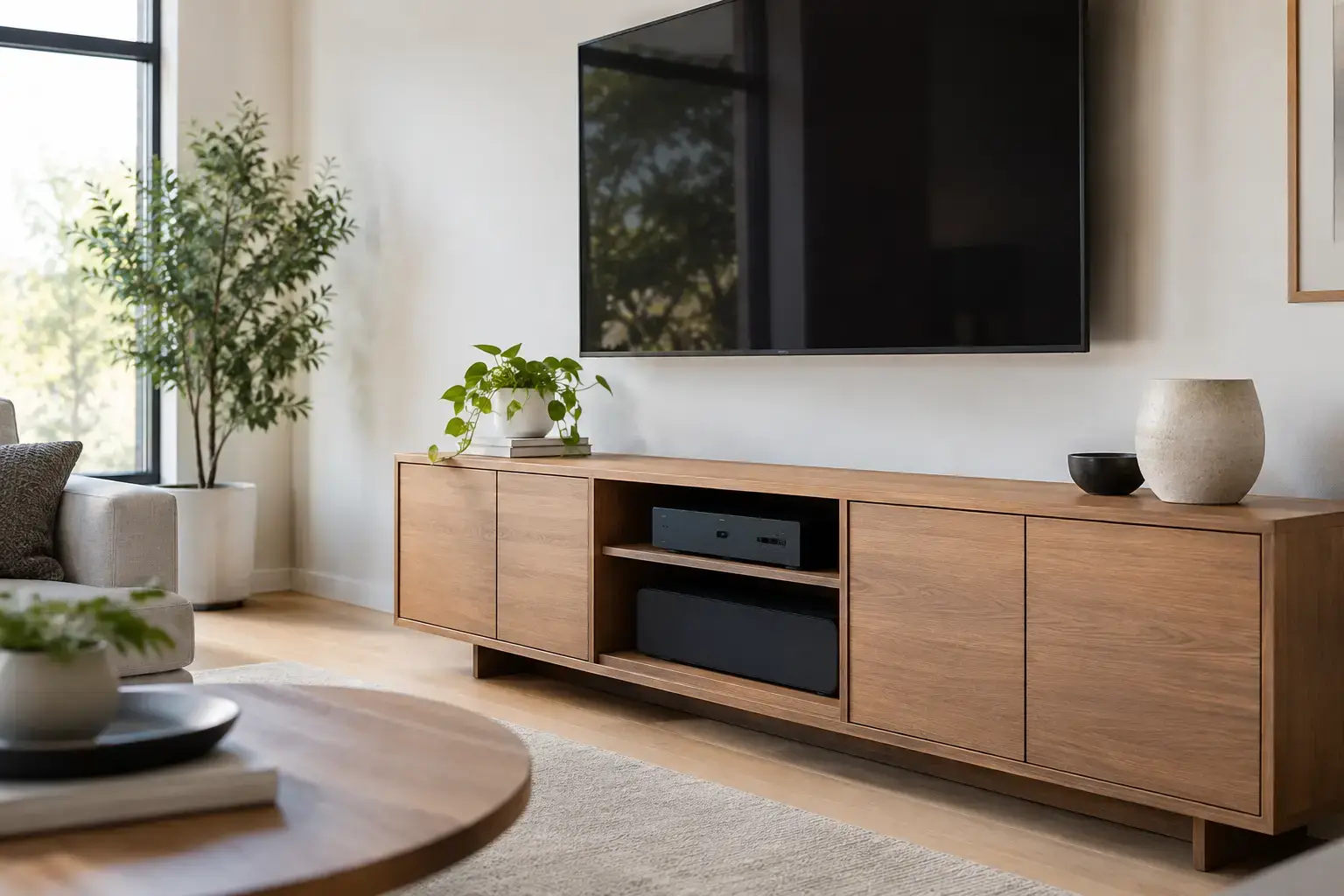
There are trade-offs. Invisible in-ceiling speakers preserve a clean visual scheme, but their performance and coverage need to be designed for the room rather than assumed. A concealed television installation may offer a more refined interior, but it needs appropriate ventilation, service access and allowance for the chosen mechanism. Good design makes these choices explicit before they become compromises on site.
A network is the foundation, not an afterthought
Modern AV, security and control systems depend on the network. Streaming, video calls, remote support, CCTV recording and automation all rely on stable connectivity, both wired and wireless. Poor Wi-Fi is not solved simply by adding more consumer wireless units after the build is complete.
A professionally designed network considers the building’s construction, floor plan, likely device count and the way each space will be used. Dense materials, metalwork, large areas of glazing and separate garden buildings can all affect wireless coverage. Wired connections should be allocated where they provide the greatest benefit, including televisions, fixed workstations, access points, cameras and equipment racks.
The network must also be organised for security and long-term management. Segregating building systems from personal devices where appropriate, documenting connections and providing sensible capacity for future changes all help protect the investment. For larger homes and commercial projects, this level of planning is what makes integrated technology dependable rather than temperamental.
Control should feel natural, not technical
The quality of an integrated system is most apparent when somebody arrives home late, starts a film, hosts guests or opens a meeting. They should not need to remember which remote belongs to which source, or work through a sequence of apps to lower blinds and adjust the room temperature.
A well-designed control interface presents the actions that matter in that particular space. In a cinema room, that may be a simple choice of film, lighting scene and volume. At a main entrance, it may be an intercom view, gate release and an arrival lighting setting. In an office, it might be a clear meeting-room control panel that starts the display and video conference equipment without a call to IT.
Simple control does not mean limited capability. It means the complexity is handled in the design, programming and commissioning rather than passed to the user. Physical keypads, touch panels and mobile control can each have a role. The right balance depends on the client, the property and the desired experience. A household that prefers tactile controls may value engraved keypads in key locations, while a commercial site may need central oversight of multiple areas.
How an AV installer works with the wider project team
Technology integration touches many trades. Electrical contractors need accurate requirements for supplies and containment. Joiners need details for recesses, grilles and equipment cabinets. Ceiling contractors require speaker and sensor locations. Mechanical teams may need to coordinate control of heating, cooling and ventilation plant.
This is why an AV installer should be chosen for their ability to collaborate, not only for the equipment they can supply. Clear drawings, site communication and programme awareness are as important as product knowledge. The installer needs to identify dependencies early, attend relevant coordination meetings and resolve details before they affect the programme.
For designers, this approach protects the visual language of the project. Technology can be incorporated with minimal visual intrusion: speakers painted to match finishes, screens integrated into joinery, keypads specified in complementary finishes and cameras positioned with care. Discretion should never mean making future access impossible, however. Components eventually require servicing, replacement or adjustment, and the design should account for this from the outset.
Commissioning is where design becomes usable
Fitting equipment is not the final stage. Systems must be configured, tested and commissioned in the completed environment. Audio requires calibration for the room. Wireless coverage should be checked in occupied spaces. Lighting scenes need refining once fittings, finishes and daylight conditions are in place. Control pages must be tested against real-world use rather than an idealised drawing.
A thorough handover is equally valuable. Clients should understand the everyday controls without being overwhelmed by technical detail. They should know who to contact for support, where equipment is located and what to do if a broadband provider changes or a room’s use evolves. For commercial clients, handover may also include familiarisation for facilities teams and clear records for future maintenance.
Ongoing support deserves attention when comparing proposals. The lowest initial price can become a false economy if the installer has limited documentation, no clear service process or little experience of maintaining complex systems. Technology should be designed with a realistic view of its lifespan, including software updates, changing content services and the eventual replacement of components.
Questions worth asking before appointing an AV installer
The strongest conversations begin with how a building should feel and function, rather than with a list of products. Ask how the proposed system will be controlled day to day, where the equipment will live, and how the design will accommodate future changes. Ask who will coordinate with the design and construction teams, and how commissioning and aftercare will be managed.
It is also sensible to discuss priorities openly. A dedicated cinema has different requirements from a relaxed family media room. A listed property may place tighter limits on cable routes and equipment locations. A development with multiple occupiers may require central management and carefully defined access rights. There is no single specification that suits every project.
At MOSAIC Audio & Visual, the starting point is to understand those priorities in context: the building, the design ambition, the people using it and the practical demands of the programme. The technology then becomes part of the property’s fabric, not an awkward addition to it.
The most successful installations are rarely noticed as technology at all. They are noticed as a home that feels more comfortable, a workplace that functions with less friction, and a space where every control is where it ought to be.




Keep In Touch