
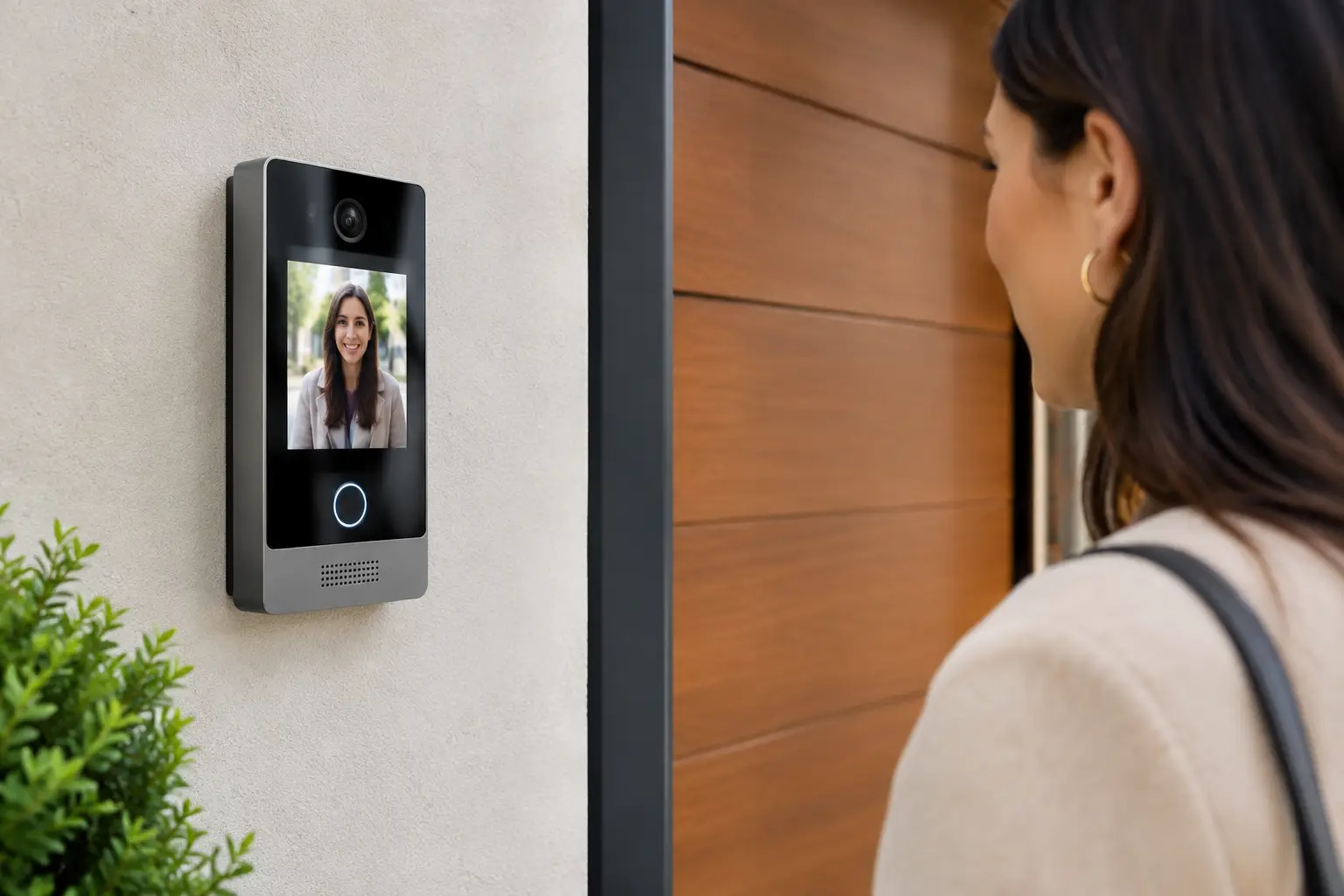
A visitor arriving at a well-designed home should not be met by a plastic doorbell, a separate camera and an uncertain answer from inside. The best video intercom options combine clear communication, controlled access and a finish that belongs with the architecture. For a family home, flat development or office scheme, the right choice depends less on a feature checklist and more on how the entrance needs to work every day.
A video intercom can be a simple point-to-point system, but it can also become part of a wider security and building-control strategy. When specified early, it can sit discreetly within a gate pillar, entrance joinery or communal lobby, while giving residents, reception teams or facilities managers a clear view of who is calling.
What makes a video intercom the right choice?
The best system is not necessarily the one with the largest touchscreen or longest list of app features. It is the one that provides dependable calls at the entrance, intelligible two-way audio, useful camera coverage and an uncomplicated route to granting access.
In a private residence, that may mean a flush-mounted panel at the front gate, indoor touchscreens in key rooms and calls appearing on a chosen mobile device when the house is empty. In a commercial setting, it may mean a reception desk can identify visitors, release a specific door and retain a clear access record without changing between disconnected platforms.
Specification should begin with the building rather than the product. A listed townhouse with a narrow entrance detail calls for a different approach from a new-build Surrey home with a gate, garage and separate service entrance. Equally, a multi-occupancy development needs clear directory management, durable communal hardware and a planned response if a resident’s device is unavailable.
Best video intercom options by application
Flush-mounted IP entry panels
For design-led private homes, a flush-mounted IP video intercom is often the most considered option. The panel can be recessed into masonry, metalwork or a bespoke gate post, with a finish selected to complement the external palette. Brushed stainless steel, black glass and custom metal finishes can all work, provided the panel is positioned for a useful camera angle and protected from the worst of the weather.
IP systems use the property’s network to carry video, audio and control signals. This makes them particularly suitable for larger homes where the front gate may be some distance from the main house, or where several internal stations are required. Products from specialist manufacturers such as 2N, DoorBird and Akuvox can offer high-quality video, card or fob access, PIN entry and mobile calling.
The trade-off is that network design matters. A poor wireless connection at a gate is not a sound basis for a primary entry system. Where practical, a cabled network connection and power over Ethernet provide a neater, more reliable installation, with fewer separate power supplies and less visible equipment.
Video intercoms integrated with home control
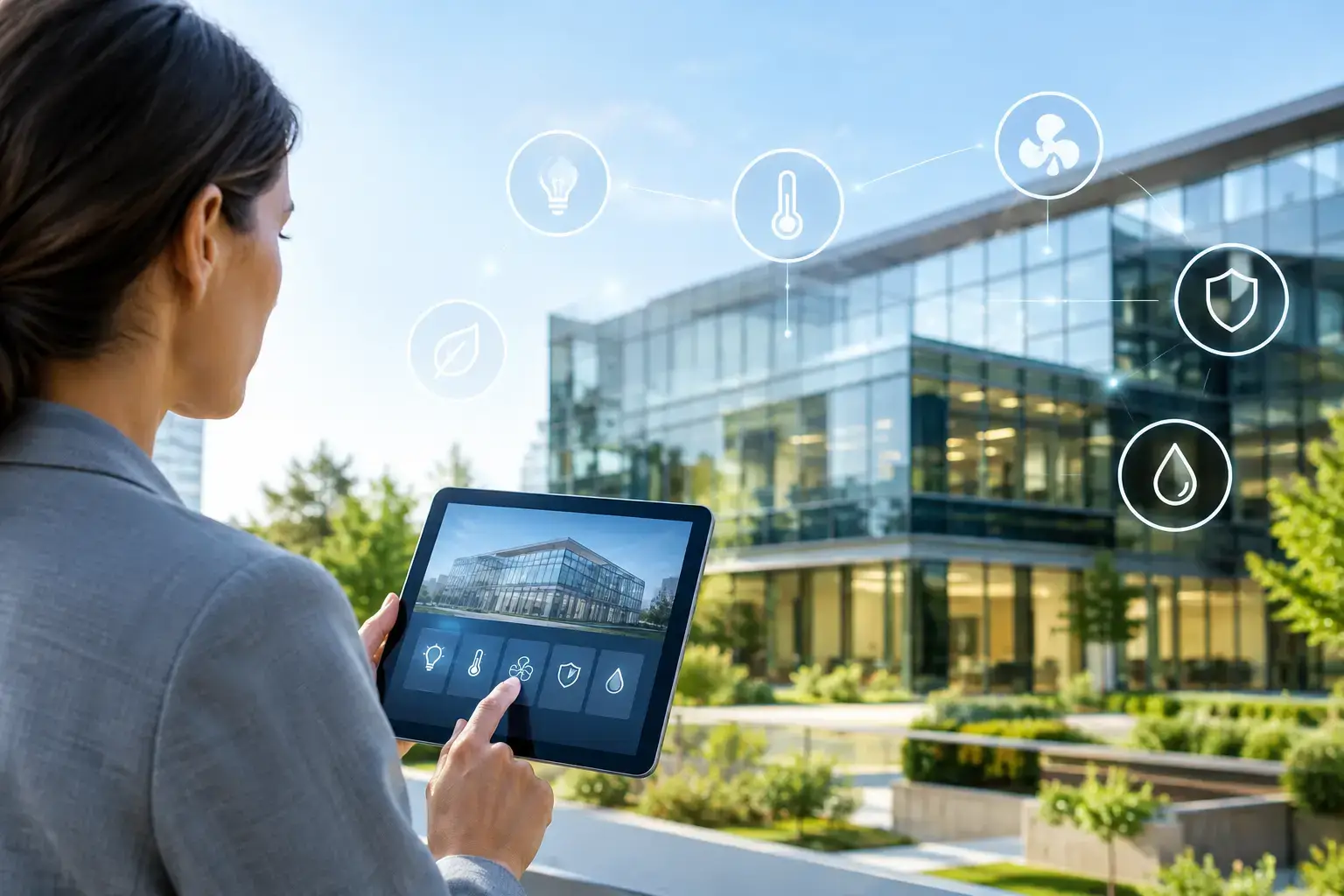
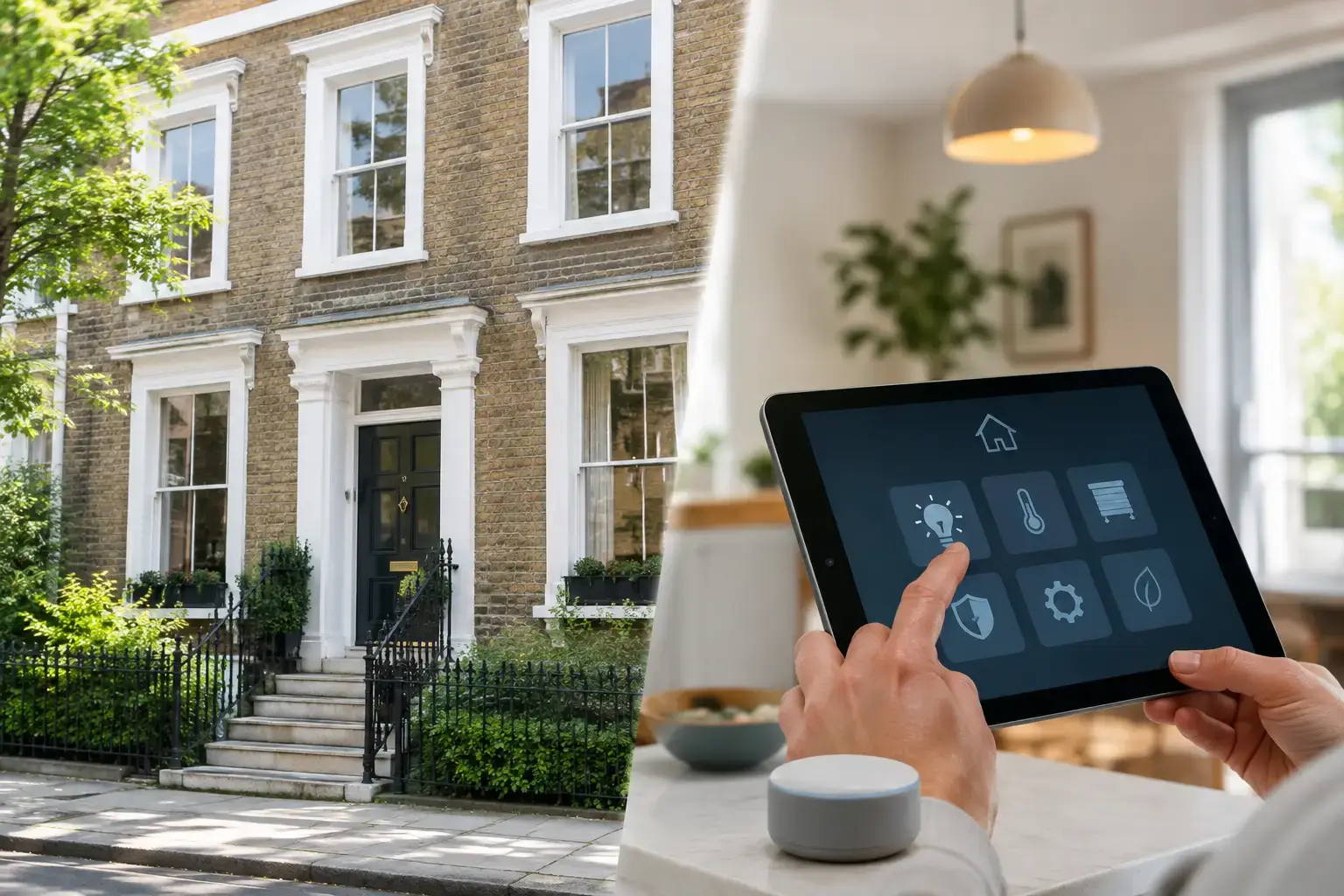
Where a home already has intelligent lighting, audio-visual control, CCTV and automated gates, an integrated intercom deserves serious consideration. Rather than asking the homeowner to use one app for the gate, another for the door camera and another for the alarm, the call can appear on the same control interface used for lighting and climate.
For example, a call from the gate can bring the entrance camera to a wall touchscreen, turn on selected exterior lighting after dark and allow the homeowner to open the pedestrian gate or driveway gate from one clear screen. The system can be programmed to behave differently for family, deliveries and regular service access.
This route suits clients who want technology to feel composed rather than conspicuous. It does require thoughtful programming and commissioning. Integration should never remove the practical ability to answer a door or release a gate if a central control processor is being serviced, so sensible fallback operation is part of a good design.
Gate and perimeter intercom systems
A gate intercom is often the first point of contact with a property, and it faces tougher conditions than an entrance-door panel. Camera position needs to capture a driver or pedestrian without being defeated by low sun, headlights or a high vehicle approach. Audio must remain understandable in wind and traffic noise, while the panel must be located within reach without forcing a visitor to stand in the road.
At larger properties, access may involve a pedestrian gate, vehicle gate and delivery entrance. These should be planned as one system, with each entrance assigned the right release permissions. A housekeeper might need access at the service gate during agreed hours, while a tradesperson can be admitted only after visual verification.
ANPR, keypad and credential readers can be useful additions, but they should not be selected simply because they are available. Number-plate recognition can be convenient for regular vehicles but needs carefully considered privacy settings, lighting and exception handling. A keypad can be effective for temporary access, but codes should be easy to change and not shared indefinitely.
Multi-tenant and flat entrance systems
For flat buildings and mixed-use schemes, the priorities shift towards resident directories, call routing, management access and the appearance of communal areas. A video panel needs to remain intuitive for visitors who have never used it before. Clear names, logical searching and a responsive call connection matter more than visual novelty.
Residents may answer through an internal monitor, a mobile device or both. Providing both is usually preferable: the internal monitor remains available even when a phone is charging elsewhere or a resident prefers not to rely on an app. For developments with concierge provision, the same entrance calls can be routed to reception during staffed hours and residents outside them.
Access control should also be considered alongside the intercom. Shared doors, parcel rooms, cycle stores and car parks often need different credentials and schedules. An integrated approach reduces duplicated cards, isolated databases and confusion for building managers.
Commercial reception and office intercoms
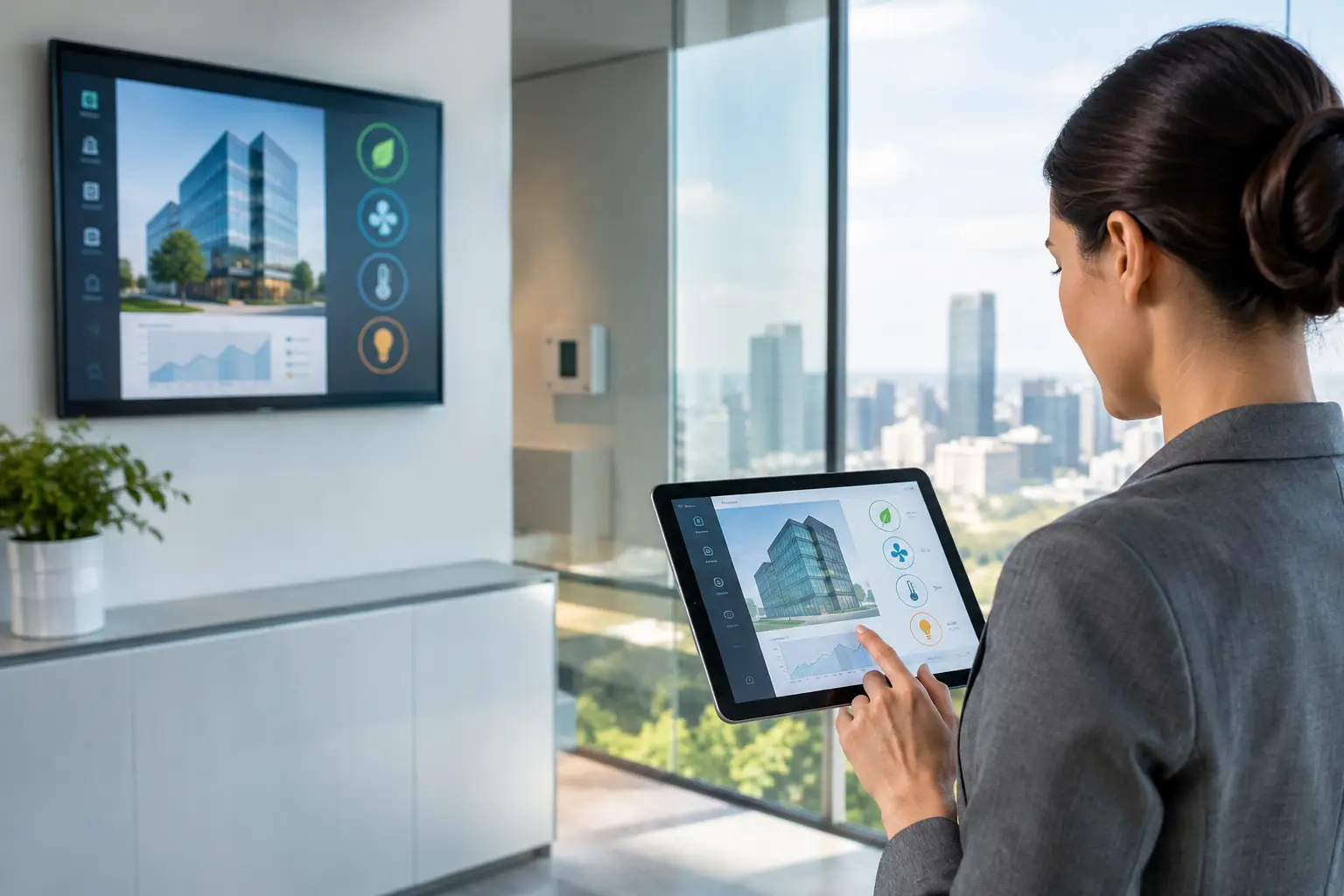
Offices need an entry experience that balances welcome with control. A single office suite may need only a polished entrance panel and a reception release button. A multi-storey building may require lift permissions, tenant-specific directories, turnstiles and central administration for hundreds of users.
For commercial projects, consider how the system will be managed after handover. Receptionists need a simple interface. Facilities teams need the ability to add or remove users quickly. Security teams may require the intercom camera to work alongside CCTV, without treating an intercom recording as a substitute for a properly designed surveillance system.
Features worth specifying early
Before selecting a manufacturer, establish the operational requirements with the client, architect and security team. Four areas are especially influential:
- Call destinations: Decide whether calls go to internal stations, mobile devices, reception, security personnel or a combination of these.
- Access methods: Consider keys, fobs, cards, PINs, mobile credentials, biometric readers or number-plate recognition in relation to the building’s users and risk profile.
- Network and power: Allow for cabled network routes, protected external equipment, suitable power provision and a network designed for video traffic.
- Visitor experience: Confirm directory format, accessibility, night-time lighting, camera framing and how a courier or first-time visitor will understand the panel.
Video quality is relevant, but resolution alone is a poor measure of performance. Wide dynamic range can help when the visitor is backlit, while low-light performance and considered illumination can improve identification after dark. A very wide camera lens may show more of the driveway, yet distort faces when someone is standing close to the panel. The correct lens and mounting height are as significant as the stated resolution.
Design, privacy and long-term service
An entrance panel becomes part of a façade or interior scheme for years, so its physical detailing deserves the same care as its technology. Avoid treating it as a late addition after stonework, joinery and gate design have been finalised. Early coordination allows for concealed cabling, consistent material choices, correct mounting heights and a result that looks intentional.
Privacy also needs to be addressed honestly. A live video call to a homeowner is different from recording public areas continuously. If footage is retained, the system should have a defined purpose, proportionate retention settings and appropriate management arrangements. On commercial and multi-occupancy sites, responsibilities for access to recordings and user data should be clear from the outset.
Finally, plan for service. External panels are exposed to weather, use and occasional accidental damage. Credentials change, occupants move and mobile operating systems evolve. A system that is well documented, accessible for maintenance and supported by its installer will remain easier to live with than a cheaper installation with no considered aftercare.
For projects across London and the South East, MOSAIC approaches video intercoms as part of the building experience, not a standalone gadget. The most satisfying result is quiet in its operation: visitors know where to call, occupants can respond with confidence, and the technology leaves the architecture to make the first impression.
Keep In Touch