
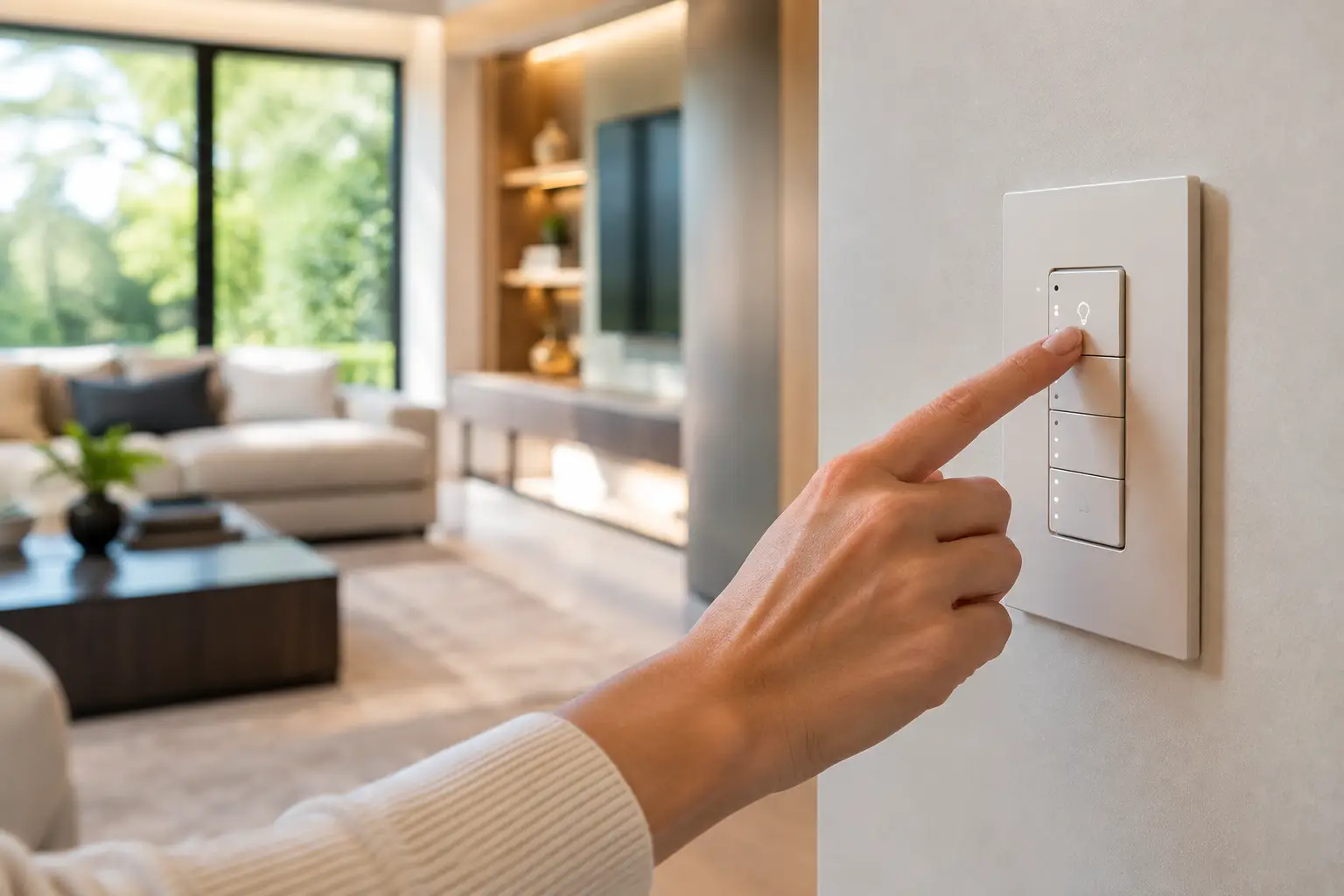
A well-designed home should not require a row of switches, competing apps and trial-and-error scenes to feel right. This Lutron review looks at why the brand remains a leading choice for considered lighting and shading control in premium homes, and where it makes the most sense within a wider integrated technology scheme.
Lutron is not simply a smart lighting product. At its best, it is an architectural control system that brings lighting, blinds and curtains into one intelligible experience. A single keypad can set the atmosphere for breakfast, entertaining or an evening film, while automated shades can manage daylight and privacy without detracting from the interior.
That distinction matters. For a new-build or substantial renovation, lighting control should be considered alongside the electrical design, joinery, window treatments, AV and network infrastructure. Lutron is particularly effective when it is planned early enough to support the architecture rather than added as an afterthought.
Lutron review: what the system does well
Lutron’s principal strength is the quality of its lighting control. It is designed to dim lights smoothly, recall scenes reliably and make a large number of circuits simple to operate. Instead of treating each fitting as an isolated device, the system allows layers of light – decorative pendants, downlights, wall lights, joinery lighting and exterior illumination – to work together.
This is valuable in rooms with several lighting types. A kitchen-dining space may need bright, practical task lighting in the morning; a softer setting for dinner; and low-level circulation lighting late at night. The right scene avoids asking the homeowner to adjust six separate controls every time the room changes purpose.
Keypads are another reason Lutron is widely specified in design-led properties. Rather than filling a wall with conventional switches, a tailored keypad can provide clearly labelled commands in a finish selected to complement the scheme. The visual benefit is obvious, but the practical benefit is just as important: controls remain understandable for family members, guests and household staff.
Lutron’s wired systems are also well suited to larger or more complex properties, where reliability and scale are essential. A properly designed system can manage lighting throughout the home, including garden areas, garages, guest accommodation and service spaces, without turning control into a collection of unrelated products.
Shading is more than a finishing touch
Motorised blinds and curtains are often specified for convenience, but their greater value is in environmental control. Automated shading can reduce glare in a south-facing living room, protect artwork and furnishings from harsh sunlight, and provide privacy at the appropriate time of day. It can also help a room feel composed, particularly when window treatments are substantial or difficult to reach.
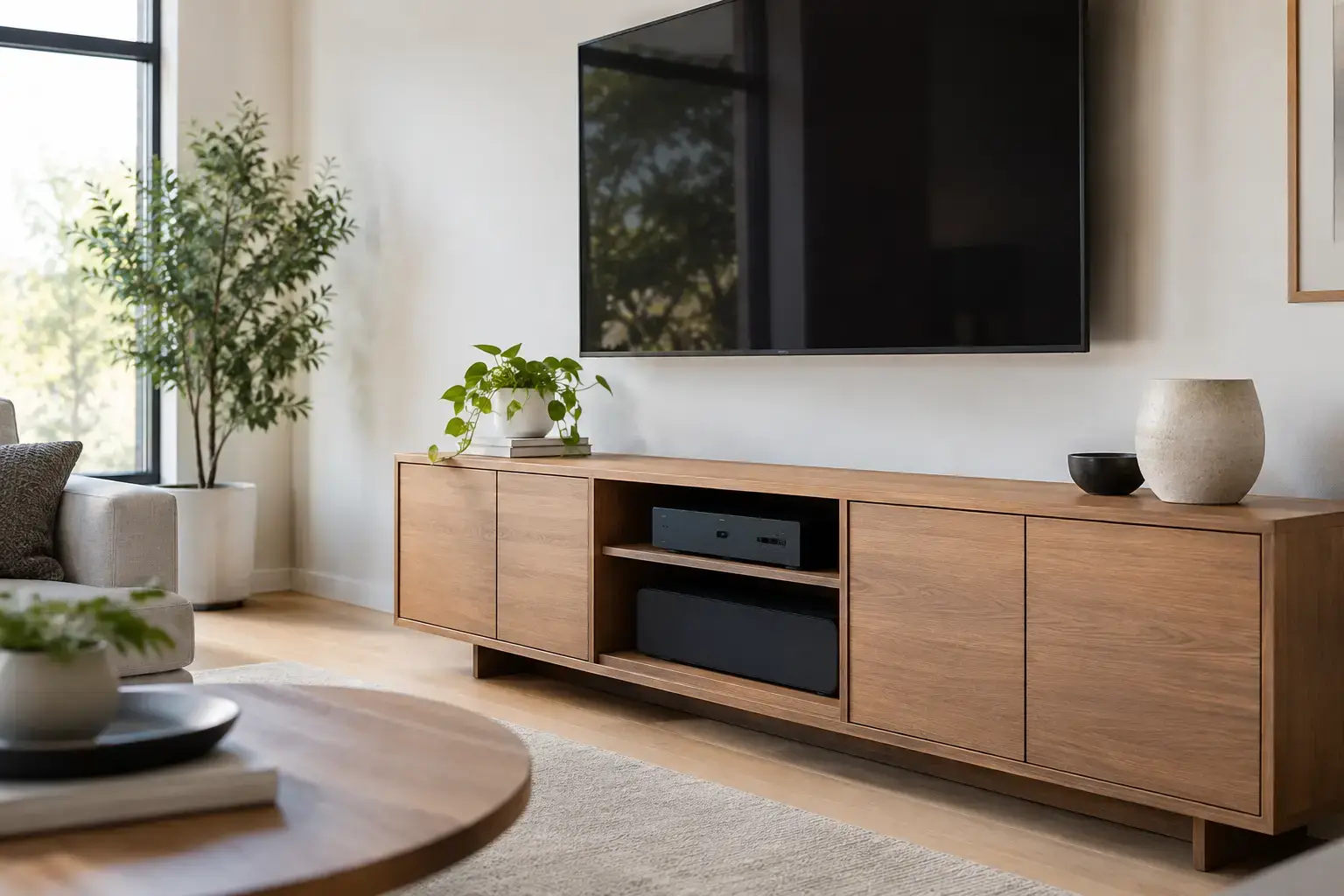
When lighting and shading are coordinated, the experience becomes more natural. Shades can lower as daylight fades while the interior lights rise gradually to maintain the desired ambience. In a cinema or media room, a single command can close blackout blinds, lower the lights and prepare the AV system. The technology is doing several things at once, but the user only needs to make one simple choice.
This is where a bespoke installation differs from a collection of consumer smart devices. The aim is not to automate every movement for its own sake. It is to remove repetitive actions and make the home respond appropriately to how it is used.
Which Lutron system is right?
The appropriate Lutron platform depends on the size of the project, the desired level of integration and whether the work is a renovation or a new build. For a larger residence with extensive lighting, automated shading and a centralised approach to control, a professionally specified system such as HomeWorks is often the natural choice. It offers considerable flexibility in control design and is intended for substantial, tailored projects.
For smaller homes, individual floors or refurbishments where rewiring must be limited, a wireless-based solution may be more appropriate. These systems can still deliver refined keypads, scene control and shading, but they may not offer the same breadth of design freedom as a fully engineered whole-home installation.
The distinction should not be reduced to property size alone. A compact London flat with carefully considered joinery, complex window treatments and high expectations for finish may justify a sophisticated system. Conversely, a large home with straightforward lighting requirements may not need every available feature. The correct specification begins with the client’s routines, the interior design and the long-term use of the building.
The importance of lighting design
Lutron controls light exceptionally well, but it cannot compensate for a weak lighting plan. The fittings, beam angles, colour temperature, placement and circuiting all shape the final result. A beautiful keypad will not make a poorly lit kitchen feel inviting, and sophisticated dimming cannot correct glare from badly positioned downlights.
For the strongest outcome, lighting design and control should be developed together. That allows scenes to be considered while the space is still on paper: what should greet someone arriving home, how should artwork be lit, which lights remain on after bedtime, and how should the house behave when unoccupied?
For projects using tunable or high-quality architectural lighting, the opportunity is greater still. Light can be tailored not only by brightness, but by tone and character, helping rooms feel calm, functional or intimate at the appropriate moment. This needs careful design, however. More capability is only valuable when it is translated into controls people will use with confidence.
Integration with the rest of the home
A Lutron system can form a highly effective part of a wider intelligent home. It can be coordinated with AV, heating and cooling, security, access control and voice control through the appropriate system design and interfaces. A ‘Goodnight’ command, for example, might turn off selected lights, lower blinds, arm the security system and set the home to an energy-conscious night-time condition.
The key consideration is ownership of the experience. If every system operates through its own app, the home can feel fragmented even when each individual product is excellent. An integrator can bring the most useful commands into a unified control interface, while retaining dedicated Lutron keypads where physical, immediate control is most appropriate.
Network design should not be overlooked. While a professionally installed lighting system is not dependent on consumer Wi-Fi in the way many retail smart-home products are, the wider connected home certainly relies on sound network infrastructure. Remote access, AV streaming, intercoms, security cameras and control interfaces all benefit from a properly designed and supported network.
The trade-offs: cost, planning and flexibility
The principal trade-off with Lutron is that it is not a low-cost, off-the-shelf route to smart lighting. The investment includes not only equipment, but electrical planning, programming, keypad selection, installation, commissioning and future support. For a significant project, this is often the right approach. For a single room where basic wireless lamp control is all that is required, it may be disproportionate.
Planning is equally important. Centralised lighting systems, concealed shade pockets, power provision for blinds and coordinated ceiling details are easiest to deliver before walls are closed and finishes are installed. Retrofitting is possible in many situations, but it can involve more compromise in cabling, available controls or window treatment design.
There is also a question of how much automation is genuinely useful. A successful home does not feel as though it is constantly making decisions on behalf of its occupants. It should offer helpful defaults while allowing quick manual control. Well-labelled keypads, sensible scenes and thoughtful programming matter more than an overlong list of commands.
Who should choose Lutron?
Lutron is an excellent fit for homeowners who value lighting as part of the interior architecture rather than as a purely functional utility. It is especially compelling where there are multiple lighting layers, large expanses of glazing, bespoke curtains or blinds, and a requirement for discreet control points that suit a carefully finished interior.
It also performs well on commercial and multi-unit residential schemes where dependable operation, consistent specification and clear user control are required. Meeting rooms, reception spaces, executive offices and amenity areas all benefit from lighting and shading that support the purpose of the space without demanding technical knowledge from the user.
For clients undertaking a high-specification renovation or new build, the most useful question is not whether Lutron is a good product. It is whether the proposed system has been designed around the building and the people using it. With the right electrical, lighting and integration strategy, Lutron can make a complex property feel remarkably calm, elegant and straightforward to live in.






Keep In Touch