
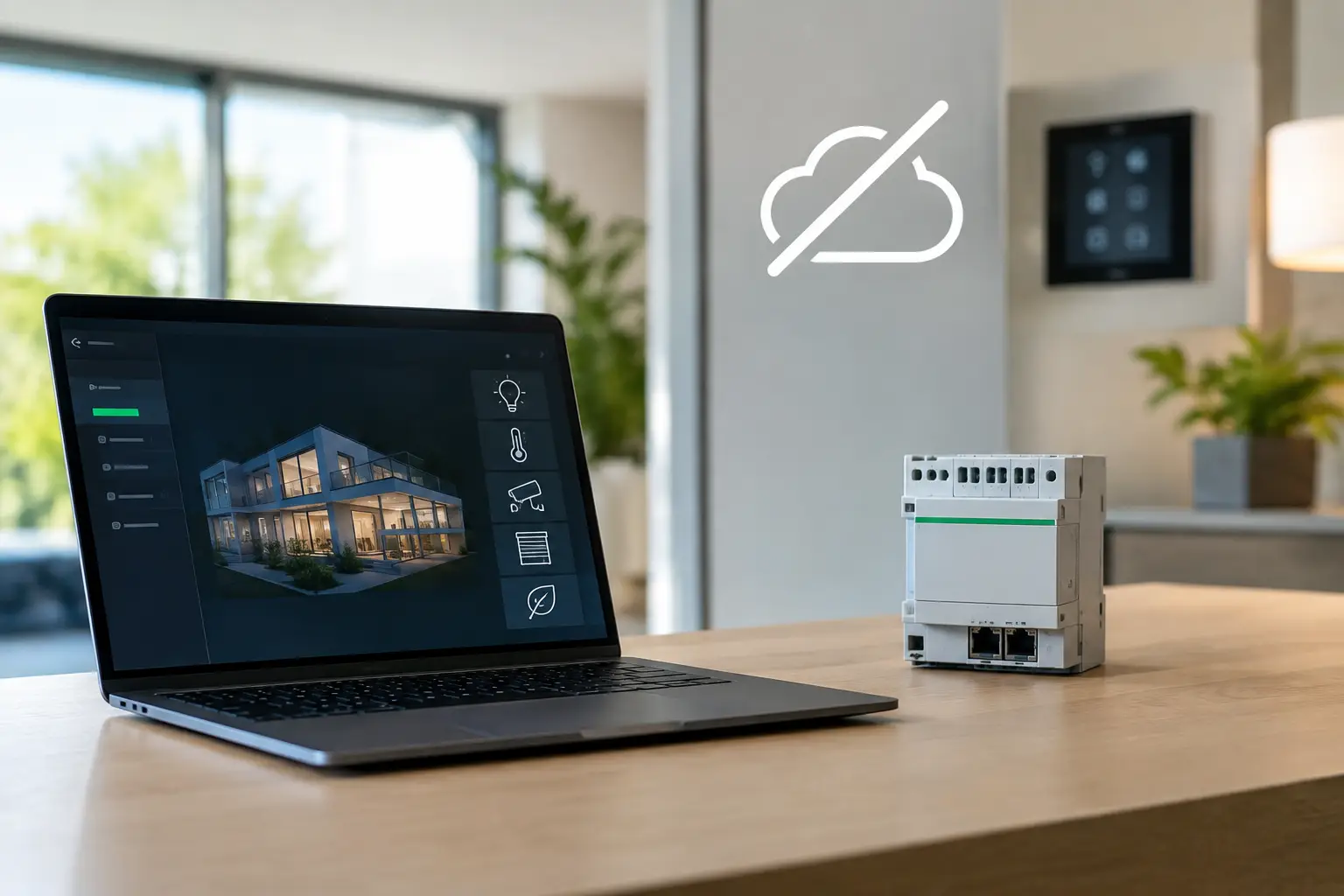
A premium home should not become less comfortable because the broadband connection drops. If you are asking, can KNX work offline, the answer is yes – and that independence is one of the reasons KNX remains a compelling choice for long-term residential and commercial projects.
At its core, KNX is designed as a decentralised building-control system. Lighting, heating, shading and other functions can continue to communicate over the KNX bus within the property, without relying on an internet connection or a third-party cloud platform. The result is technology that feels calm and dependable: wall keypads still operate, automated scenes still run and essential plant control remains where it belongs – in the building itself.
Can KNX Work Offline Without Compromise?
For the fundamental controls, yes. A conventional KNX installation uses dedicated wiring and local devices such as sensors, keypads, actuators and logic controllers. Each device is commissioned to understand its role and communicates using group addresses on the bus. Pressing a bedside keypad to turn off the lights does not need a request to travel to a remote server and return before the command is carried out.
This local architecture matters most in the moments clients rarely plan for: an internet outage, an issue with a router, planned maintenance by an internet provider, or a cloud service changing its terms or withdrawing support. The lighting in a kitchen, the blinds in a bedroom and the heating schedule for an office should not be held hostage by any of these events.
Offline operation does not mean that every feature will be available in every project. It means the core system can be specified so that essential behaviour continues locally. The precise outcome depends on the equipment selected, the way the system is programmed and the integrations included around it.
What Continues to Work When the Internet Is Down?
A properly designed KNX system can retain day-to-day operation of automated lighting, dimming, blind and curtain control, local heating and cooling commands, occupancy-based responses, timed scenes and selected security actions. A welcome scene at the entrance can still set lighting and shading to the required state. A meeting room can still respond to a keypad command. A plant room can still manage the functions assigned to local control.
Schedules can also continue where they are stored in a local KNX device or dedicated controller. For example, a shading routine based on time of day can run without broadband, provided its timing and logic do not depend on an external service.
The strength here is not merely convenience. It is a more considered approach to building technology. A system serving a family home or multi-storey office should retain its basic intelligence within the property, rather than treating the building as a collection of internet-connected accessories.
Local control is different from remote access
This distinction is worth making early in a project. Local control means the system works inside the building through its wired controls, sensors and KNX devices. Remote access means controlling or monitoring that system from elsewhere, usually through a phone, tablet or support connection.
When internet service is unavailable, a homeowner may not be able to check the property from abroad, receive cloud-based alerts or adjust a room from a mobile app using mobile data. Yet the occupants inside should still be able to use the controls naturally. In a well-considered scheme, the elegant wall control remains the primary interface, not a fall-back option.
Where Offline Operation Has Limits
KNX can be highly independent, but modern properties often contain systems that introduce external dependencies. Voice assistants normally require cloud services. Weather information sourced online will not update during an outage. Some third-party smart devices are built around manufacturer accounts and may lose functionality if they cannot reach their servers.
Remote notifications, off-site CCTV viewing and support access also need an active internet connection. An IP camera may still record locally to a network video recorder, but viewing it from outside the property depends on the network connection being available. Likewise, an app may continue to work on the home Wi-Fi network if it talks to a local controller, but it cannot provide remote control without internet access.
Timekeeping deserves attention too. A controller with a battery-backed clock or reliable local time source can continue schedules through an outage. If a routine relies solely on internet time, it may drift or pause. These are not reasons to avoid connected features; they are reasons to specify them with a clear understanding of what happens when they are unavailable.
Designing an Offline-First KNX System
The best time to address resilience is during system design, alongside the electrical, mechanical and interior-design plans. Retrofitting a coherent control strategy later is possible, but rarely as elegant or cost-effective.
Start by defining the functions that must always work. For most homes, this includes essential lighting, manual lighting scenes, heating or cooling control, blind operation and practical security interfaces. In commercial settings, it may also include critical plant states, core lighting zones, access-related actions and local control in meeting spaces.
Then establish where the logic sits. Simple functions can often operate directly between KNX sensors and actuators. More sophisticated scenes, conditional logic and integrations may sit in a local logic controller. This can be the right solution, provided the controller is selected and programmed as a dependable part of the building infrastructure rather than as a consumer gadget.
A resilient specification should consider the following four areas:
- Control paths: Key functions should have an intuitive physical control, even if they are also available through an app or touch panel.
- Local logic: Essential schedules, scenes and responses should be retained within KNX devices or local controllers wherever practical.
- Network design: A professionally planned network, appropriate segregation and dependable power provision help IP-based elements perform as intended.
- Failure behaviour: Each integrated system should have an agreed response to loss of internet, network failure, power interruption and equipment replacement.
This is where integrated design adds real value. It is not enough to select reputable products individually. Lighting, HVAC, AV, security, networking and control need to be planned as one environment, with clear priorities for each failure scenario.
Wired KNX and IP are complementary
KNX installations often include KNX IP interfaces or routers. These are valuable for programming, visualisation, connection to local apps and communication with other systems. Their presence does not turn KNX into a cloud-dependent system.
The important question is whether an IP component is carrying an optional convenience feature or providing the only route for an essential command. A lighting keypad connected directly to the KNX bus is inherently different from a cloud app sending an instruction through several external services. Both have a place, but they should not be treated as equivalent.
For larger homes and commercial developments, IP can provide useful scale and flexibility across buildings, floors or network segments. A specialist integrator can combine this flexibility with the local reliability that makes KNX attractive in the first place.
Power Cuts Are a Different Question
Offline does not mean operational during a power cut. KNX devices, network equipment, lighting drivers and heating controls need electrical power. If continuity during a mains outage matters, it should be addressed through a wider power-resilience strategy, such as uninterruptible power supplies for selected control equipment or a generator for more substantial requirements.
The requirement should be proportionate. Maintaining a router and controller through a brief interruption is very different from keeping a large residence, lift, plant room or commercial facility fully operational. What matters is agreeing the priority loads before equipment is selected.
Why This Matters for a Long-Term Property
Building technology should age gracefully. A property may change hands, be refurbished, have its network upgraded or see its preferred apps and devices evolve. A locally controlled KNX foundation gives the building a stable technical language beneath those changes.
It also supports a better user experience. Family members, guests and staff should not need to understand network settings, account log-ins or competing apps to use a room. They should see a discreet control in the appropriate place, press it and get the expected result. That is sophisticated technology expressed through simple behaviour.
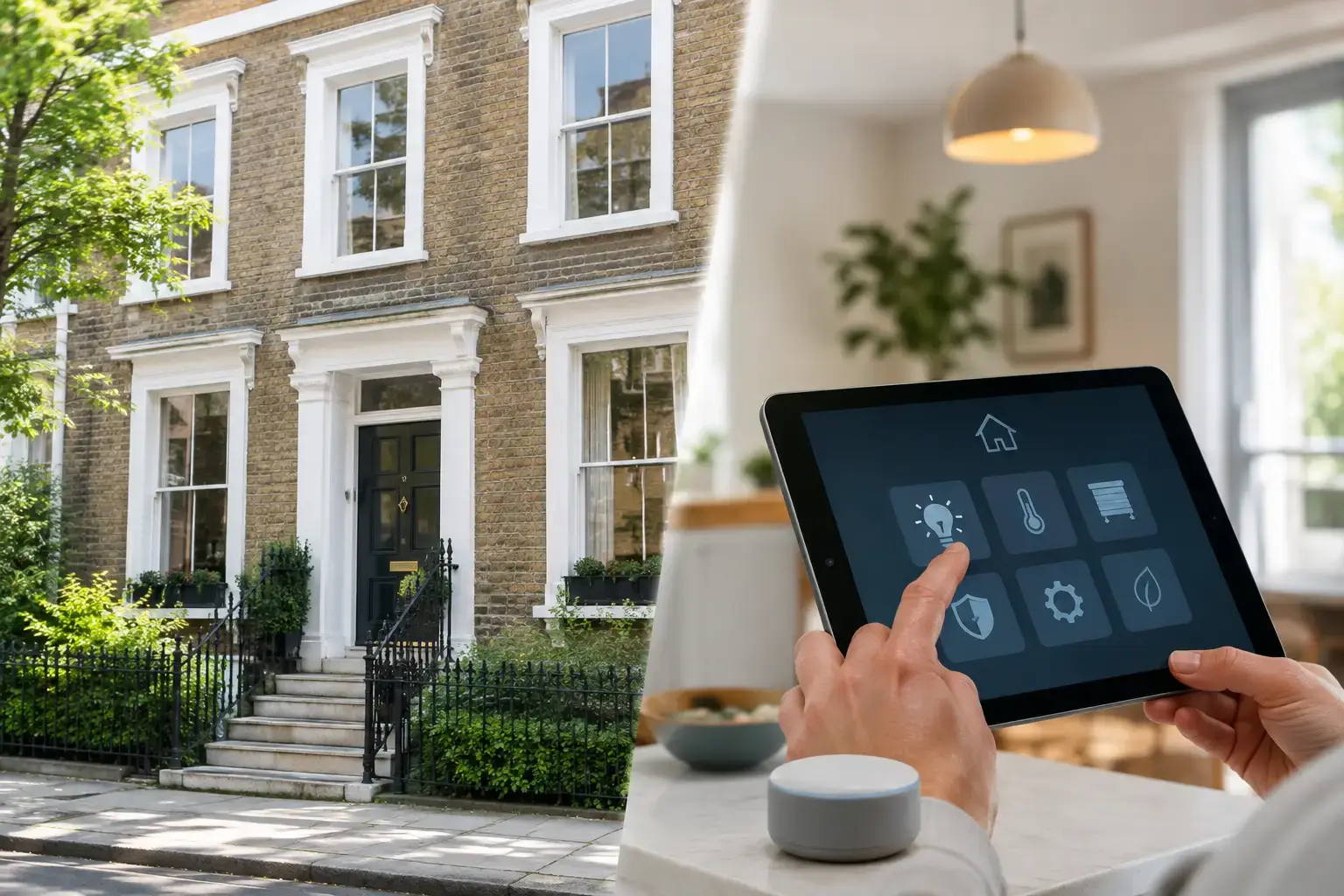
For design-led projects across London and the South East, MOSAIC approaches KNX as part of the wider building environment, not as an isolated product choice. The objective is to preserve the architecture and interior scheme while making everyday control more comfortable, secure and straightforward.
When planning a KNX project, ask not only what the system can do when everything is connected, but what you expect it to do when the connection is not there. That single conversation often leads to a more dependable, more elegant building.




Keep In Touch