

A search for “KNX integrator London” often begins with a wish for better control of lighting, heating or security. On a premium residential or commercial project, however, the choice affects far more than a single feature. It determines whether every connected system works as part of the building, while the spaces themselves retain the clarity and character intended by the architect or interior designer.
KNX is a well-established building-control standard used to coordinate systems including lighting, shading, climate, ventilation and plant control. Its strength is not simply that it can automate these functions. It provides a dependable foundation for a tailored control strategy, rather than forcing a property to work around a collection of standalone products and apps.
Start with the building, not the technology
A capable KNX integrator in London should take time to understand how the property will be used before specifying equipment. A family home has different priorities from a multi-storey office: the former may need calm evening scenes, discreet security and straightforward guest controls; the latter may require zone-based lighting, environmental control and practical building-management visibility.
The best outcomes are planned early. During a new build or substantial renovation, the integration team can work alongside the architect, M&E consultant, contractor and interior designer to coordinate cabling, equipment locations, keypads and ceiling details. This avoids visible compromises later, such as a poorly placed thermostat, excessive wall controls or technology cupboards with insufficient ventilation and access.
Retrofitting KNX is possible, but the available routes depend on the building fabric, programme and budget. Wireless solutions can be useful in selected areas, while a wired infrastructure remains the preferred approach where walls and ceilings are already open. A good integrator will explain these trade-offs clearly rather than applying one answer to every project.
Control should feel considered, not complicated
The point of an integrated system is to reduce decisions, not add another screen to manage. A well-designed KNX installation can combine several actions into a single, intelligible command. Leaving the house might lower heating, switch off selected lighting, close blinds and arm security systems. At night, a bedside keypad can set a gentle route to the bathroom without illuminating the entire floor.
That does not mean every function should be automated. Some clients want lighting scenes that change throughout the day; others prefer the certainty of manual adjustment with carefully designed presets. The right balance comes from discussing routines, occupancy and the way each room is experienced.
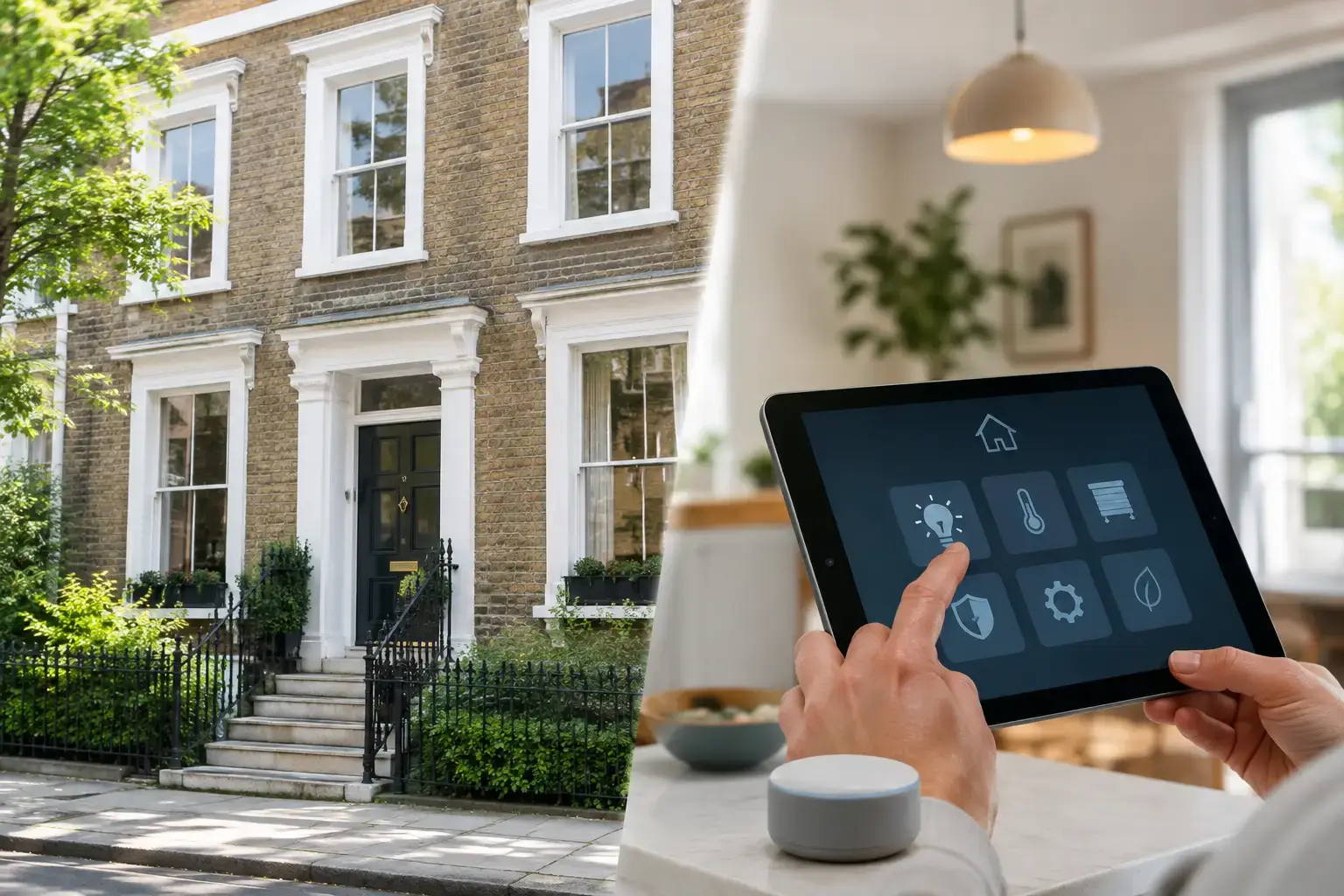
Physical controls remain particularly valuable. A finely selected keypad provides immediate, consistent operation for residents, visitors and staff, while a tablet or phone can offer wider adjustment where appropriate. The controls should suit the interior scheme in finish and proportion, but their labels and behaviour matter just as much. Attractive hardware is of limited value if no one is sure what it does.
Integration reaches beyond lighting and heating
KNX is often specified for automated lighting and climate control, but it can play a wider role within a joined-up building strategy. It may receive information from occupancy sensors, contact sensors or weather stations, then use that information to guide shading, heating or ventilation. It can also communicate with AV, access control, CCTV and network systems through properly planned interfaces.
This is where experience across multiple disciplines matters. A cinema room, for example, may call a lighting scene when a film begins. An office reception may need access events to inform lighting and environmental settings. These functions are useful only when they have a clear purpose and are tested as part of the whole system.
For commercial projects, the requirements may also include BMS systems, plant control, user permissions and a handover process suitable for facilities teams. Residential projects tend to place greater emphasis on comfort, visual discretion and simple everyday use. The underlying discipline is the same: each system needs defined responsibilities, reliable communication and a control interface that makes sense to its users.
Ask how the system will be supported
A KNX system is a long-term part of the property, not a finishing item to be forgotten after practical completion. Before appointing an integrator, ask who will commission the system, document its programming and provide support after handover. It is sensible to establish how future alterations will be managed too, particularly where a property may gain an extension, a new entertainment space or changed occupancy requirements.
Clear documentation is valuable for homeowners, estate managers and future project teams. It helps ensure that adjustments can be made with confidence and that the original design intent is not lost over time. Training also matters. The most sophisticated installation should still be comfortable to operate on the first evening in the property.
At MOSAIC Audio & Visual, KNX is considered as part of the wider environment: lighting, climate, AV, security and network infrastructure brought together around the client’s brief. The aim is not technology for its own sake, but a building that responds elegantly to the people using it.
The right integrator will leave you with controls that feel natural, infrastructure that supports change, and rooms that remain focused on living or working well.






Keep In Touch