
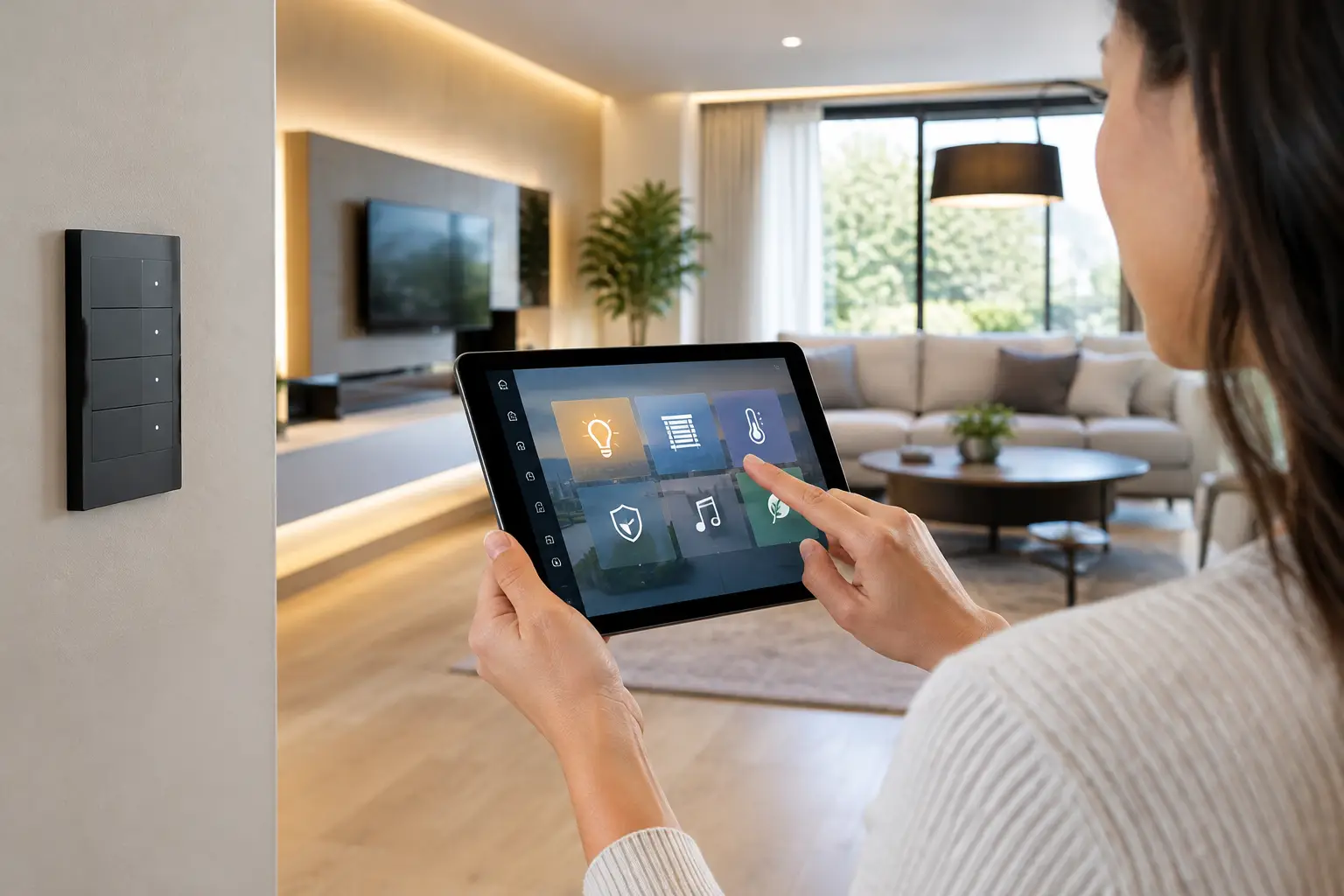
A well-designed room should not ask its occupants to think like system operators. At 7am, the bedroom lights should rise gently, blinds should respond appropriately and the heating or cooling should already be working towards a comfortable temperature. In a meeting room, one control should prepare the space for a presentation without a search through separate lighting, blind and AV controls. KNX scene programming is what makes that level of considered control possible.
A scene is a stored set of instructions. It tells several devices, or several functions within the same device, how to respond to one command. The result is not technology for its own sake. It is a property that reacts in a way that feels natural to the people using it, while respecting the architecture, interiors and practical demands of the building.
What KNX scene programming does
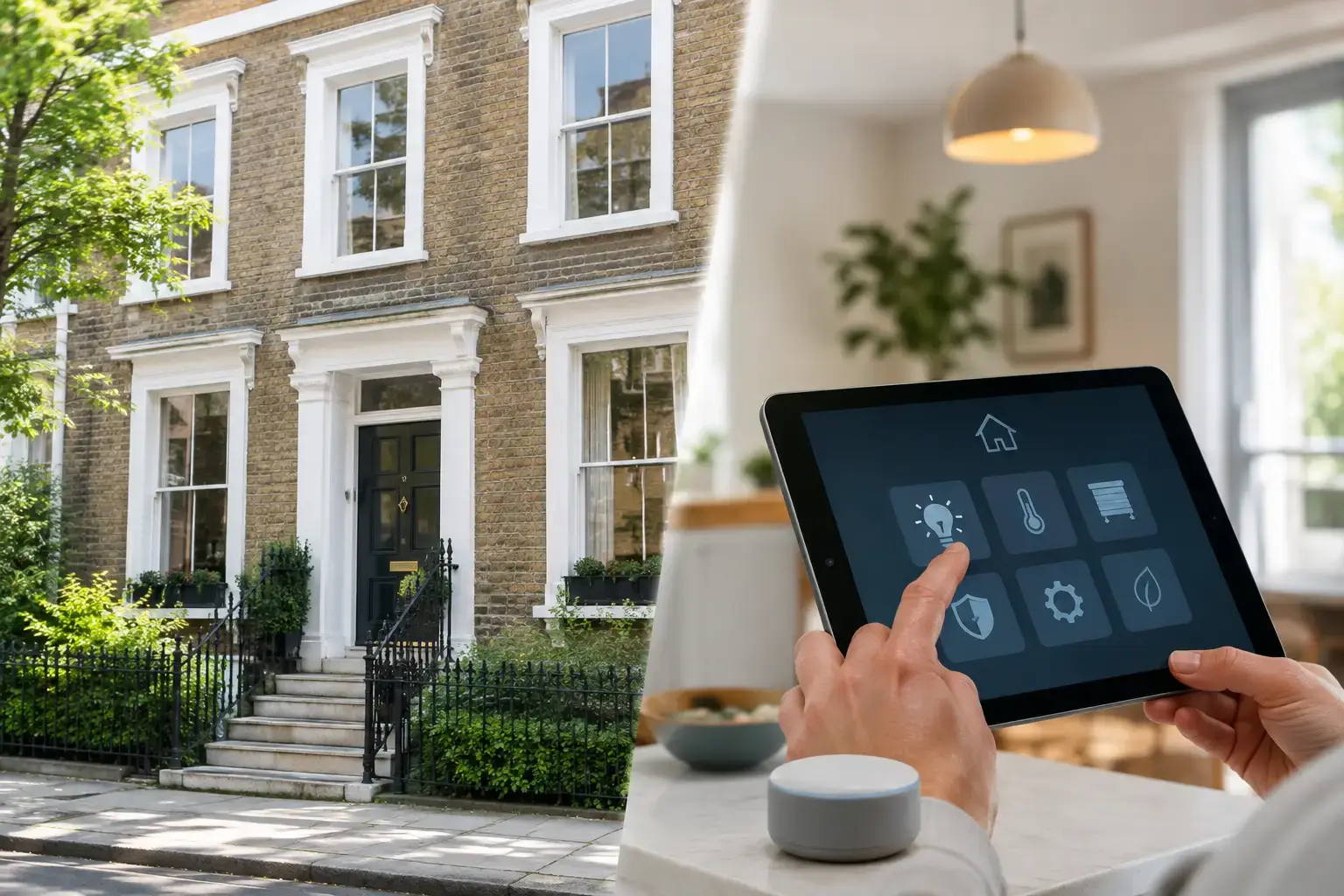
KNX is an established building-control standard used across residential and commercial projects. It allows compatible lighting, shading, climate, ventilation, security and other building systems to communicate through a common control infrastructure. A scene brings selected actions together under a single button, touchscreen command or scheduled event.
For example, an ‘Evening’ scene in a family home might lower selected blinds, set decorative lighting to a warm level, switch off task lighting in unused areas and adjust the temperature setpoint. A ‘Cinema’ scene could close blackout blinds, dim circulation lights, power the display and audio system, and prevent a doorbell notification from interrupting the film.
The intelligence lies in the coordination. Each device still performs its own task, but the user experiences one clear instruction rather than a sequence of separate actions. In a carefully specified system, the scene can be available from a discreet wall keypad, a touch panel, a mobile interface or an approved voice-control layer. The interface should suit the space and the client, rather than forcing the client to adapt to the technology.
Scenes are not the same as automation
Scenes and automation are closely related, but they serve different purposes. A scene is usually a deliberate choice made by a person: press ‘Entertain’, ‘Goodnight’ or ‘Presentation’, and the building adopts the desired setting. Automation responds to conditions without that direct instruction, such as sun position, occupancy, time of day, room temperature or a security state.
The most successful projects use both, with clear boundaries. External blinds may move automatically to reduce solar gain, for instance, but an occupant should be able to select a scene that temporarily prioritises the view. Heating can follow an efficient daily programme, while a ‘Guest Bedroom’ scene prepares a room at the right time without altering the climate strategy for the whole house.
Over-automating a building can be as frustrating as under-automating it. If lighting changes unexpectedly or shading repeatedly overrides an occupant’s preference, the system soon feels intrusive. KNX scene programming provides a useful middle ground: sophisticated behaviour that remains understandable and easy to change when circumstances demand it.
Designing scenes around real routines
The best scene names rarely sound technical. They reflect the way a property is used: ‘Arrive Home’, ‘Breakfast’, ‘Away’, ‘Cleaning’, ‘Meeting’, ‘Close Office’ or ‘Goodnight’. Behind those simple labels may sit considerable programming and careful commissioning, but the client should not need to see that complexity.
This begins with asking specific questions during design. How does the household arrive at the property? Which rooms are used early in the morning? Does the kitchen become a work space during the day? Are there artworks that need a particular lighting treatment? Will a reception area need a polished arrival sequence, then a different setting for an evening event?
In a London townhouse, an arrival scene may light the entrance, hall and stairs at restrained levels, disarm selected internal functions where appropriate and create a welcoming route through the home. In a commercial setting, a presentation scene might set lighting zones, lower blinds, activate AV equipment and adjust ventilation to suit a fuller room. The principle is the same, but the priorities are different.
Lighting scenes need restraint
Lighting is often the most visible part of a scene, and it is where careful design makes the greatest difference. A scene should consider layers of light rather than simply making a room bright or dim. General illumination, joinery lighting, picture lights, pendants and task lighting can each support a particular activity.
A dinner setting, for example, may retain soft light over the table and circulation areas while reducing brighter sources elsewhere. It should still make the room safe to move through and practical for serving food. A late-night setting may offer a low-level route to a bathroom without waking the rest of the household.
Exact levels matter, but they should not be treated as permanent from the first site visit. Daylight, finishes, furniture and lamp selection all affect the final result. Scene programming is most effective when it is refined after the interior is complete and the space can be experienced as it will be lived in.
Climate and shading should support comfort
Scenes can also coordinate comfort systems. A ‘Wake’ scene may begin to raise the bedroom temperature before occupants get up, while ‘Away’ can return selected spaces to an energy-conscious setpoint. In rooms with substantial glazing, blinds and climate should be considered together. Lowering blinds at the right time can reduce glare and solar gain, limiting unnecessary cooling demand.
There are sensible limits. Rapidly changing temperature in response to every scene selection is rarely efficient, because heating and cooling systems respond more slowly than lighting. It is usually better for scenes to make modest setpoint adjustments and for the underlying plant control to manage the wider strategy. This is particularly relevant on larger homes and office developments with multiple zones, heat sources and ventilation requirements.
The practical value of a well-planned ‘Away’ scene
An ‘Away’ scene is among the most valuable examples because it joins convenience, energy management and reassurance. Depending on the specification, it can turn off non-essential lighting, place heating or cooling into an appropriate setback mode, close selected blinds, switch AV equipment to standby and confirm that chosen access-control or security functions are armed.
It should not indiscriminately shut down a building. Refrigeration, network equipment, plant systems, exterior security lighting and other essential services may need to remain active. Nor should it create a nuisance by closing blinds that protect a view, an interior planting scheme or a required ventilation arrangement. The right response is always shaped by the property and its operational needs.
For commercial projects, departure scenes also help establish consistent closing routines. Staff do not need detailed knowledge of every system, while facilities teams retain the ability to manage exceptions and review building status. That clarity becomes more valuable as a project grows in scale.
Why commissioning matters as much as programming
A scene can be technically correct and still feel wrong. A keypad might use unclear labels; lights could fade too quickly; a meeting-room display may require more time to start than the scene allows. These details are resolved through commissioning, testing and client handover.
A specialist integrator will test scenes in the real environment, check how connected systems respond and tune fade times, priorities and control logic. They will also consider what happens when a user makes a manual adjustment. If someone opens a blind after choosing a scene, should the system leave it alone, restore the setting later or react only when another command is given? There is no universal answer, but there should be a deliberate one.
The same care applies to fault conditions and future service. Key scenes should remain reliable if an individual lamp circuit, device or interface is unavailable. The underlying programme should be documented so additions, changes of use and maintenance can be handled without guesswork. This is one reason a properly engineered KNX installation has lasting value beyond the first handover.
KNX scene programming for evolving properties
Properties change. Children grow up, rooms are repurposed, a home office becomes a guest suite, or a commercial floor is reconfigured for a new tenant. KNX scene programming can accommodate those changes without replacing the entire control philosophy, provided the original system has been specified with sufficient capacity and a coherent structure.
That flexibility should not encourage vague planning at the outset. Early coordination with architects, interior designers, M&E consultants and contractors remains essential. Control locations, lighting circuits, blind motors, network provision and equipment spaces all influence what a scene can achieve elegantly. MOSAIC approaches these decisions as part of the wider building design, so the finished controls feel considered rather than added after the fact.
The aim is simple: a building should respond with confidence, whether someone is leaving for work, welcoming guests or preparing a boardroom for an important conversation. When scenes are based on genuine routines and refined on site, the technology recedes and the space simply feels right.






Keep In Touch