
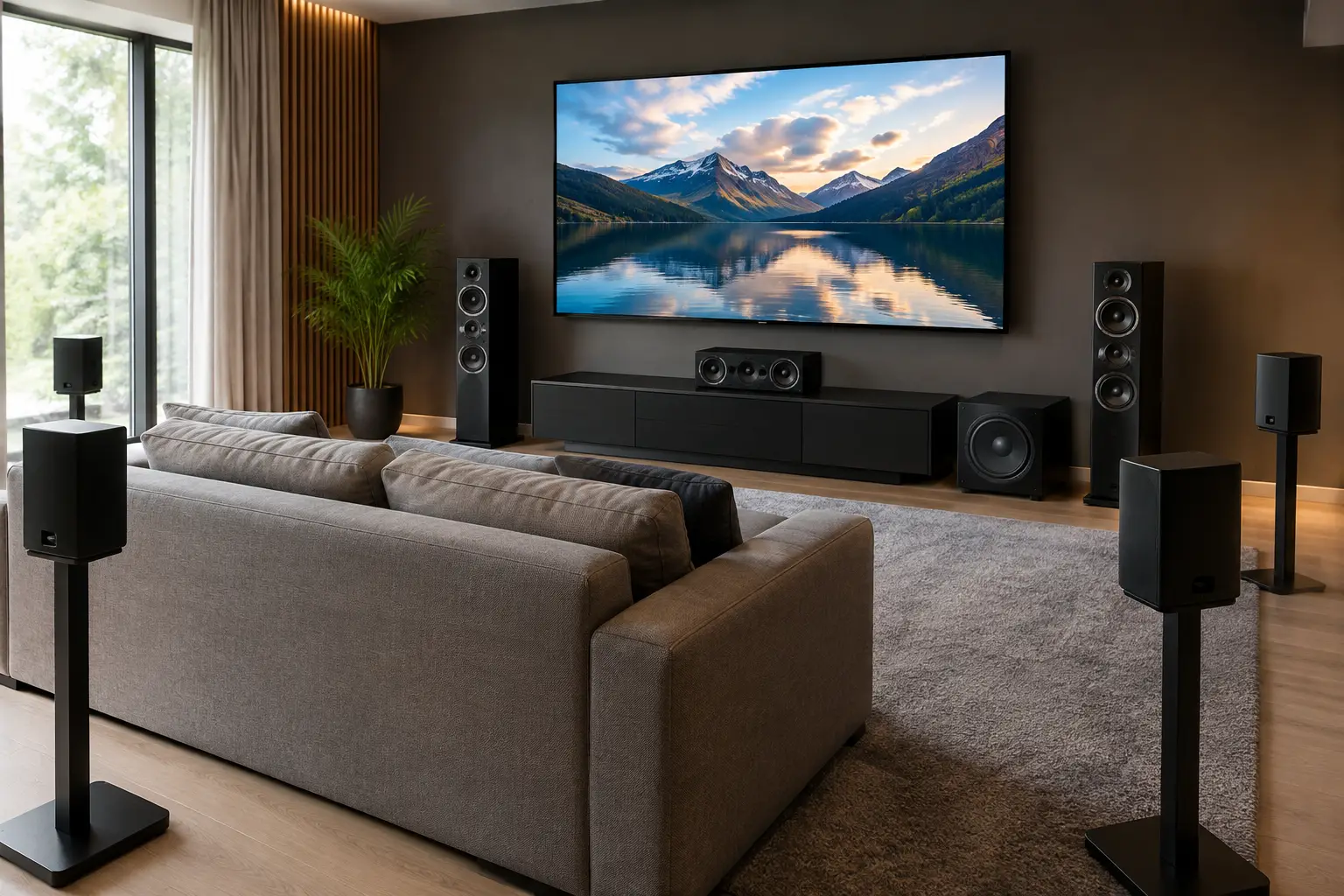
A convincing cinema room is not created by adding more speakers. It is created when every speaker, screen, light level and control point has a clear role in the room. Home Cinema Installation: Designing a 7.1 Surround Sound System requires this wider view, particularly where a dedicated cinema must sit comfortably within a carefully considered London home, renovation or new build.
A 7.1 system can deliver genuinely enveloping sound without turning a room into a visible collection of equipment. The result should feel immediate and cinematic when the film begins, then remain discreet, straightforward and attractive for the rest of the day.
Home Cinema Installation for a 7.1 System
The numbers describe the layout: seven full-range speaker channels and one subwoofer channel. Across the front of the room, left, centre and right speakers carry the soundtrack’s scale, music and dialogue. Surround speakers at the sides and rear create the movement and atmosphere that make a scene feel as though it extends beyond the screen.
The centre speaker deserves particular attention. Most spoken dialogue is anchored here, so it must be placed at an appropriate height and aligned with the image. A large screen with a poorly positioned centre channel can look impressive but leave voices sounding detached or difficult to follow.
Room proportions, seating position and interior finishes all influence the specification. A compact cinema may benefit from carefully selected on-wall or in-wall speakers, while a larger room may allow for more substantial architectural loudspeakers and dedicated subwoofer placement. There is no benefit in specifying equipment beyond what the room can support well.
Position speakers around the seating, not the furniture
The principal listening position is the starting point for speaker design. Front left and right channels should frame the screen evenly, while the centre channel remains directly associated with on-screen action. Side surrounds belong beside or slightly behind the main seating row, with rear surrounds placed behind it to complete the sound field.
This becomes more nuanced in family rooms with several sofas, occasional seating or an open-plan layout. A system can be optimised for the main viewing position while still offering an enjoyable experience to everyone else. The right approach depends on whether the room is intended primarily for film nights, sport, gaming or everyday television.
Speaker height matters as much as horizontal position. Surround channels that are too low can become distracting and overly localised. Installed at the correct height and calibrated as a complete system, they add atmosphere without drawing attention to themselves.
Design the Room as Part of the System
A cinema’s finishes have an audible effect. Hard expanses of glass, stone and plaster can reflect sound, reducing clarity and making action sequences feel harsh at higher levels. Thick curtains, rugs, upholstered seating and selected acoustic treatments can soften excessive reflection while preserving the interior designer’s intended character.
Acoustic treatment need not mean a visibly technical room. Fabric wall panels, timber detailing and purpose-designed finishes can combine sound control with a refined architectural result. In some projects, acoustic measures are also essential for containing sound and protecting the comfort of neighbouring bedrooms or adjoining properties.
Subwoofer placement is another area where professional design pays off. Low-frequency sound is affected strongly by room boundaries, and placing a subwoofer solely where there is an empty corner can produce uneven bass across the seating area. Testing positions and calibrating the system provides a more controlled, weighty result.
Keep technology discreet and control intuitive
For many homeowners, the quality of the cinema is judged as much by its ease of use as by its performance. The room should not require a different handset for the projector, AV processor, lighting and streaming service.
A tailored control interface can bring the room to life with one command: lights lower, the projector starts, the screen appears and the correct source is selected. Lighting scenes can be set for arrival, viewing and interval use, while automated blinds or blackout treatments can protect image quality in rooms with daylight.
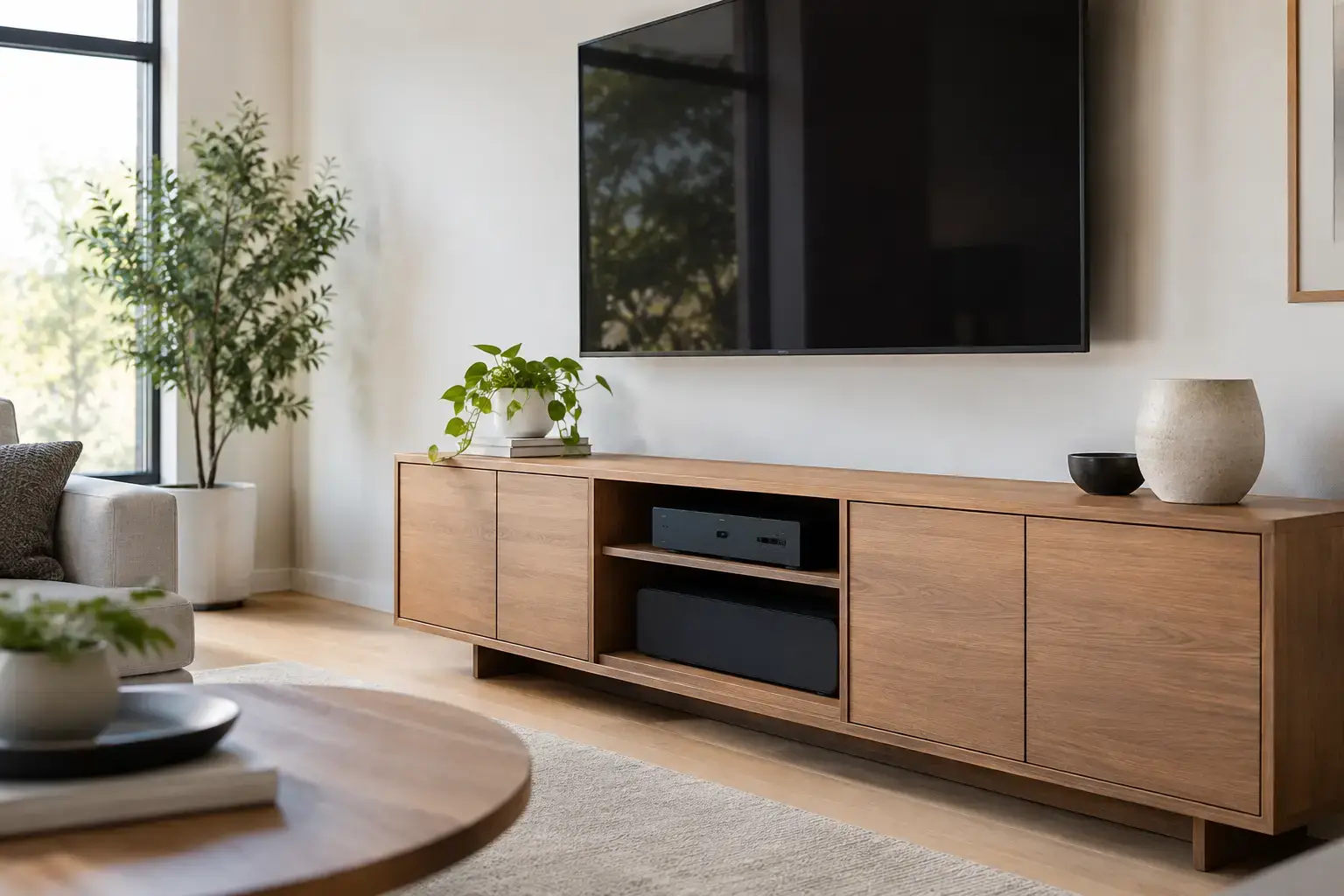
Equipment can be housed in a ventilated joinery cabinet or a separate technical rack, reducing visual clutter and fan noise. This also allows for sensible cable management, service access and future upgrades without disturbing finished interiors.
Allow for Calibration and Change
A 7.1 surround sound system is only complete after commissioning. Speaker levels, distances, crossover settings and timing must be tuned for the room, not simply left at factory defaults. Calibration ensures quiet dialogue remains clear, effects move naturally around the space and bass supports the soundtrack rather than overwhelming it.
It is also wise to consider how the cinema may evolve. Provision for network capacity, additional sources, upgraded video formats or future immersive audio channels is far easier to incorporate during design and construction than after decoration is complete.
A considered cinema installation should make the technology disappear, leaving the room ready for the only thing that matters: pressing play and feeling completely absorbed.








Keep In Touch