
The room should shape the experience
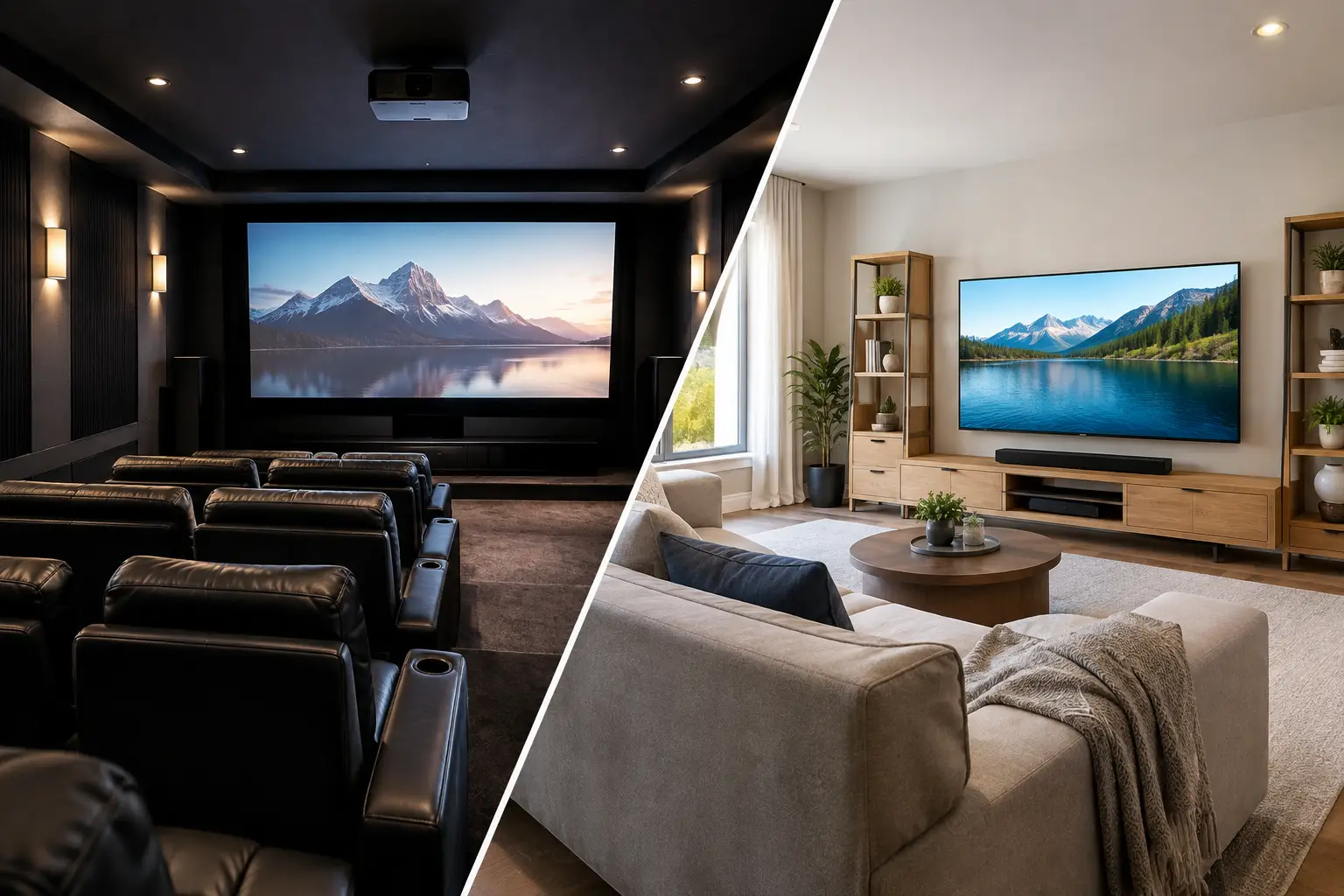
The choice between a home cinema versus media room is not simply a question of screen size. It determines how a space feels, how it is used each day and how technology sits within the architecture of the home. A dedicated cinema creates a controlled, immersive environment for film, sport and gaming. A media room brings high-quality entertainment into a more flexible living space.
For a new-build or substantial renovation, the right answer often becomes clear when the room is considered alongside the household’s routines, interior scheme and wider technology plan. The best installations do not ask a family to adapt to the equipment. They make exceptional sound, picture and control feel like a natural part of the property.
Home cinema versus media room: the defining difference
A home cinema is designed principally for focused viewing. It is usually a dedicated room with controlled lighting, carefully positioned seating, acoustic treatment and a large projection screen or high-performance display. The objective is consistency: every seat should offer a compelling picture, intelligible dialogue and convincing surround sound.
A media room is a multi-purpose entertaining space. It may be used for a Saturday film night, children’s gaming, watching the football with friends, listening to music or simply relaxing during the day. It can contain a substantial television, discreet speakers and excellent lighting control, but it is not obliged to behave like a commercial cinema at all times.
Neither approach is inherently better. A cinema gives the greatest level of immersion, while a media room can offer more value from a prominent room in the home. The decision rests on whether the priority is a dedicated viewing ritual or adaptable everyday use.
When a dedicated home cinema is the right choice
A home cinema is particularly effective where there is a lower-ground floor, converted loft, garden building or spare room that can be dedicated to entertainment. Because it does not need to operate as a formal sitting room or family lounge, its design can be optimised without compromise.
Light control is one of the main advantages. Blackout blinds, dark finishes and low-reflectance materials allow a projector to perform at its best, even in the daytime. This creates a more cinematic image, with deeper contrast and fewer distractions than a bright, open-plan room can usually achieve.
Sound can also be treated properly. Speaker locations, bass management, acoustic absorption and insulation can be planned as part of the construction. This is especially valuable in London townhouses, flats and family homes where neighbouring rooms must remain comfortable. A well-designed cinema should feel powerful within the room without sending unwanted vibration through the rest of the house.
Seating deserves equal attention. Purpose-designed cinema seating is ideal for some clients, but it is not the only option. Tailored sofas, chaise seating or upholstered banquettes can deliver both comfort and a more refined interior feel. The key is to establish viewing positions early, before joinery, lighting and loudspeaker placement are finalised.
The trade-off is flexibility. A room designed around darkness, acoustics and screen sightlines is less likely to become the place where the family reads, works or entertains casually. For keen film lovers, that separation is precisely the appeal. For others, it can leave a valuable room underused between viewings.
Why a media room often suits modern family life
A media room is generally more relaxed and more visible within the home. It may sit beside the kitchen, form part of an open-plan living area or occupy a secondary reception room. The technology needs to complement the space rather than dominate it.
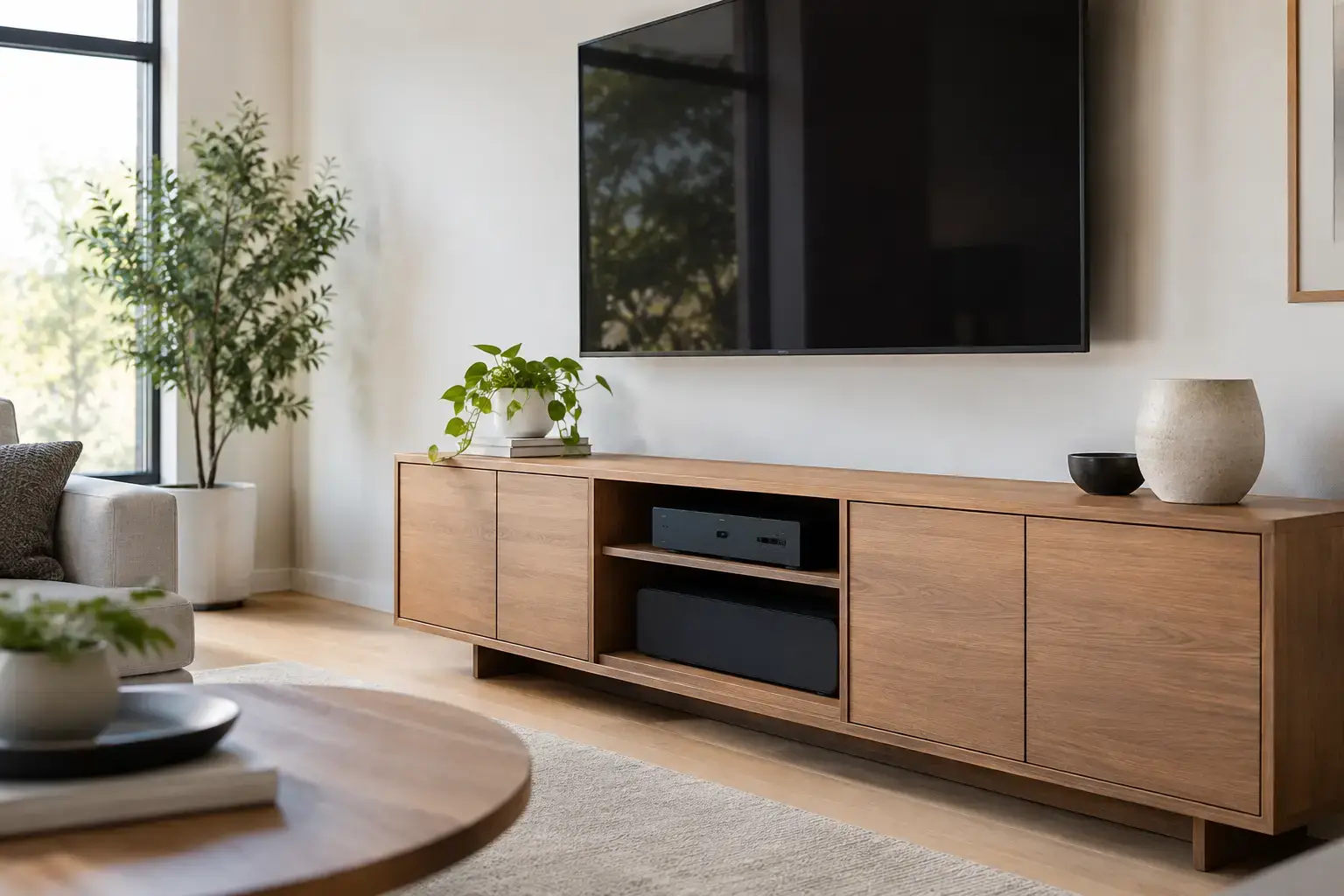
A large, high-quality television is often the practical choice in these brighter environments. It offers excellent performance in daylight and can sit flush within bespoke joinery, behind a fabric panel or alongside artwork and shelving. Motorised solutions can conceal a display when the room is intended to feel more like a lounge than an AV space.
The sound system can be equally considered. Architectural speakers may be recessed into ceilings or walls, while compact high-performance loudspeakers can be integrated into joinery. A correctly specified system creates scale, clarity and impact without filling the room with equipment or leaving cables on display.
This flexibility makes the media room appealing to households that want entertainment available at any time, without the formality of going to a separate cinema. It is also often the more appropriate solution where floor area is limited or where a room must fulfil several roles.
There are compromises. Open-plan spaces are harder to control acoustically, and large windows affect picture performance. These challenges can be managed through automated blinds, considered lighting scenes, speaker calibration and the selection of the right display technology. They simply need to be addressed at the design stage rather than after furniture has arrived.
Sound, picture and control should be planned together
The most successful entertainment rooms are not assembled from isolated products. Screen size affects seating distance. Seating affects speaker placement. Lighting affects picture quality. Network capacity affects streaming reliability. Even heating and ventilation matter, particularly in enclosed cinema rooms containing AV equipment and several people.
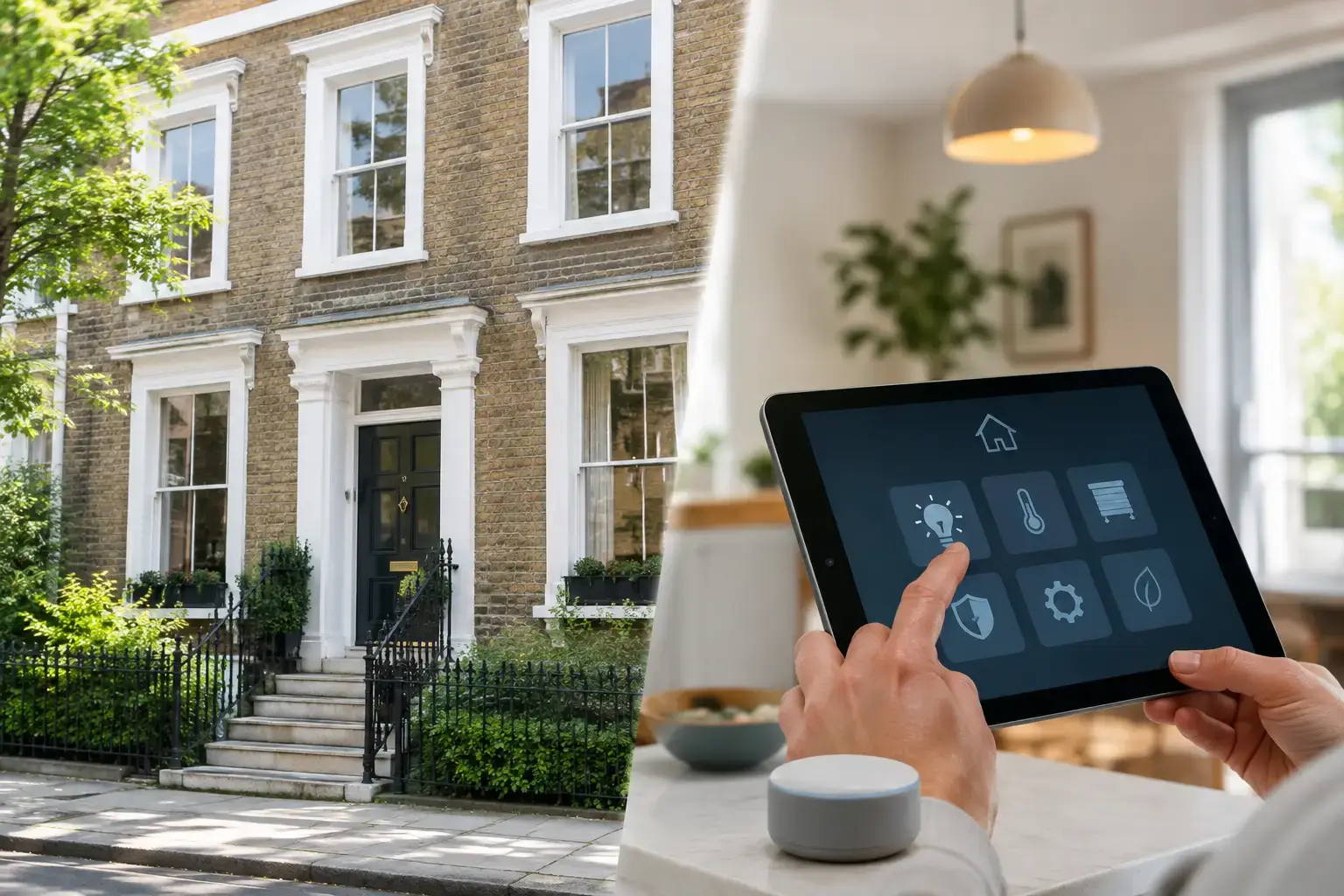
This is where integrated design earns its place. A single control interface can prepare the room for a film by lowering blinds, selecting the source, setting the lighting to an appropriate scene and adjusting the temperature. When the programme ends, the room can return to its normal setting without a collection of remotes, apps or visible technical clutter.
For a media room, the same approach can support different activities. A daytime setting might retain natural light and background music, while an evening entertainment setting lowers the blinds, changes the lighting and activates the television and surround sound. The technology remains sophisticated, but the experience stays straightforward.
A reliable network is fundamental in both cases. Streaming services, multi-room audio, control systems and gaming all depend on properly designed wired and wireless infrastructure. This is easily overlooked in early planning, yet it has a direct effect on everyday enjoyment.
Designing around the interior, not around the equipment
Premium AV should enhance the interior architecture. In a dedicated cinema, that may mean integrating speakers behind an acoustically transparent screen, placing equipment in a ventilated rack elsewhere in the property and using wall finishes that improve both acoustics and atmosphere.
In a media room, discretion is often even more important. Joinery, lighting, fabrics and furniture should lead the visual story, while displays, speakers and controls are carefully integrated around them. Early collaboration between the AV specialist, architect and interior designer avoids late compromises such as surface-mounted speakers, poorly placed screens or insufficient service space.
Equipment access must be retained even when it is hidden. AV systems require ventilation, cable routes and sensible maintenance provision. Good technical design accounts for these practical requirements without diminishing the finish of the room.
Choosing the right room for your brief
If your priority is the most immersive possible experience for films, a dedicated home cinema is likely to justify the space and investment. It offers meaningful advantages in acoustics, light control and viewing comfort that are difficult to replicate elsewhere.
If you want a polished room that supports film nights but also works for everyday family life, entertaining and music, a media room is often the stronger choice. It can still provide exceptional picture and sound, provided the system is designed around the room’s real conditions.
Some larger homes benefit from both: a dedicated cinema for major viewing and a media room for daily use. This is not about adding technology for its own sake. It is about giving each space a clear purpose, with controls that remain simple for every member of the household.
The most useful first step is to decide how you want to feel when you use the room. Once that is clear, the screen, sound, lighting and control system can be shaped around it with the level of craftsmanship expected from a tailored home.


Keep In Touch